Home Blog

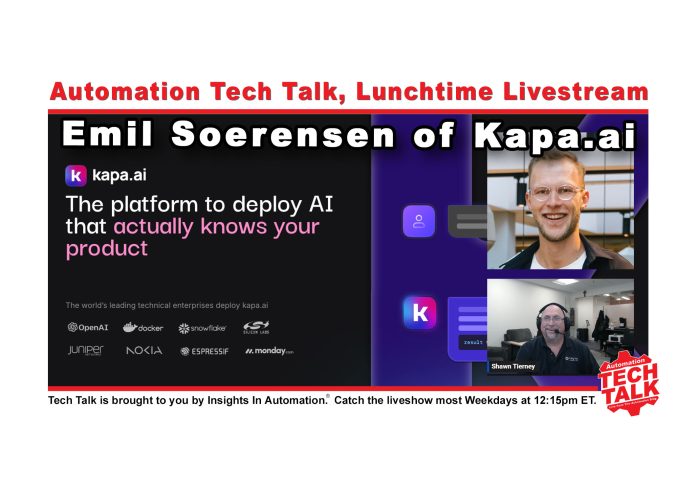
A.I. Tech Talk with Emil Soerensen of Kapa.ai (12/04/25)

Shawn meets up with Emil Soerensen of Kapa.ai to learn about his company in this episode of the Automation Tech Talk lunchtime livestream for Monday 12/04/25.

For any links related to this episode, check out the “Show Notes” located below the video.


Watch The Automation Show: (live at 12:15pm ET)


Note: To unlock the hundreds of exclusive videos, become a member starting at just $5/mo here.


Until next time, Peace ✌️

If you enjoyed this content, please give it a Like, and consider Sharing a link to it as that is the best way for us to grow our audience, which in turn allows us to produce more content 🙂

Shawn M Tierney
Technology Enthusiast & Content Creator

Support our work and gain access to hundreds members only articles and videos by becoming a member at The Automation Blog or on YouTube. You’ll also find all of my affordable PLC, HMI, and SCADA courses at TheAutomationSchool.com.

Shawn Tierney

(no views)
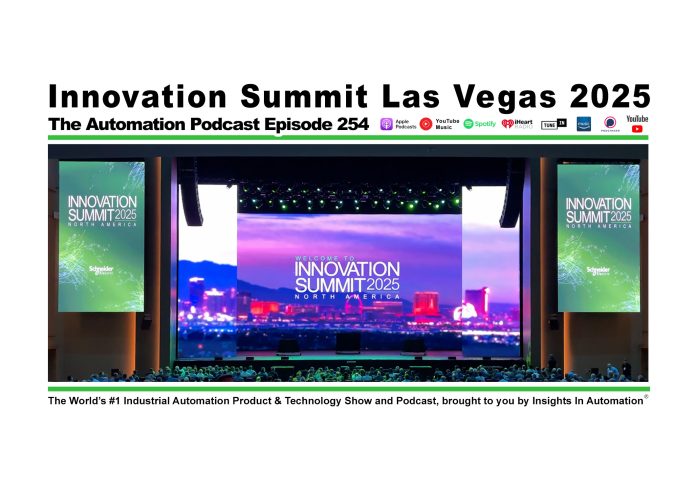
Innovation Summit Las Vegas 2025 Recap (P254)

Shawn Tierney recaps his trip to Schneider Electric’s Innovation Summit Las Vegas in this episode of The Automation Podcast.

For any links related to this episode, check out the “Show Notes” located below the video.


Watch The Automation Podcast from The Automation Blog:


Listen to The Automation Podcast from The Automation Blog:


The Automation Podcast, Episode 254 Show Notes:

Special thanks to Schneider Electric and their Marketing Partners for sponsoring my trip to this year’s Innovation Summit! Below are all the links I mentioned in this episode:


Read the transcript on The Automation Blog: (automatically generated)

Shawn Tierney (Host): coming


Until next time, Peace ✌️

If you enjoyed this content, please give it a Like, and consider Sharing a link to it as that is the best way for us to grow our audience, which in turn allows us to produce more content 🙂

Shawn M Tierney
Technology Enthusiast & Content Creator

Support our work and gain access to hundreds members only articles and videos by becoming a member at The Automation Blog or on YouTube. You’ll also find all of my affordable PLC, HMI, and SCADA courses at TheAutomationSchool.com.

Shawn Tierney

(no views)

New Features of Ignition 8.3 with Travis Cox (S2E37)

Shawn meets up with Travis Cox of Inductive Automation to learn about the new features found in Ignition 8.3 in this episode of The Automation Show.

For any links related to this episode, check out the “Show Notes” located below the video.


Watch The Automation Show from The Automation Blog:


Listen to The Automation Show on The Automation Blog:


The Automation Show, Season 2 Episode 37 Show Notes:

Special thanks to Travis for coming on the show, and to Inductive Automation for sponsoring this episode so we could release it ad free! To learn more about Ignition, please see the below links:


Read the transcript on The Automation Blog: (automatically generated)

Shawn Tierney (Host): coming later


Vendors: Would you like your product featured on the Podcast, Show or Blog? If you would, please contact me at: https://theautomationblog.com/contact


Until next time, Peace ✌️

If you enjoyed this content, please give it a Like, and consider Sharing a link to it as that is the best way for us to grow our audience, which in turn allows us to produce more content 🙂

Shawn M Tierney
Technology Enthusiast & Content Creator

Support our work and gain access to hundreds members only articles and videos by becoming a member at The Automation Blog or on YouTube. You’ll also find all of my affordable PLC, HMI, and SCADA courses at TheAutomationSchool.com.

Shawn Tierney

(no views)

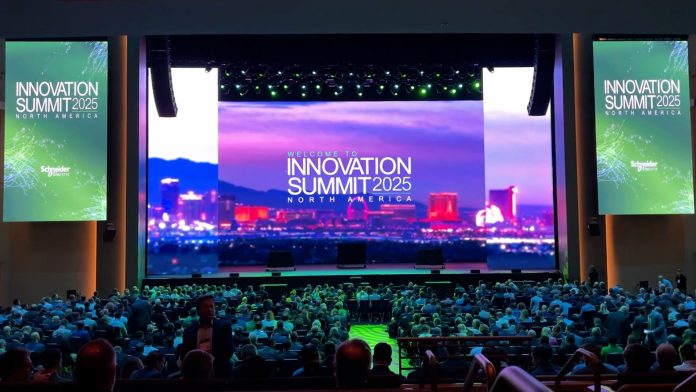
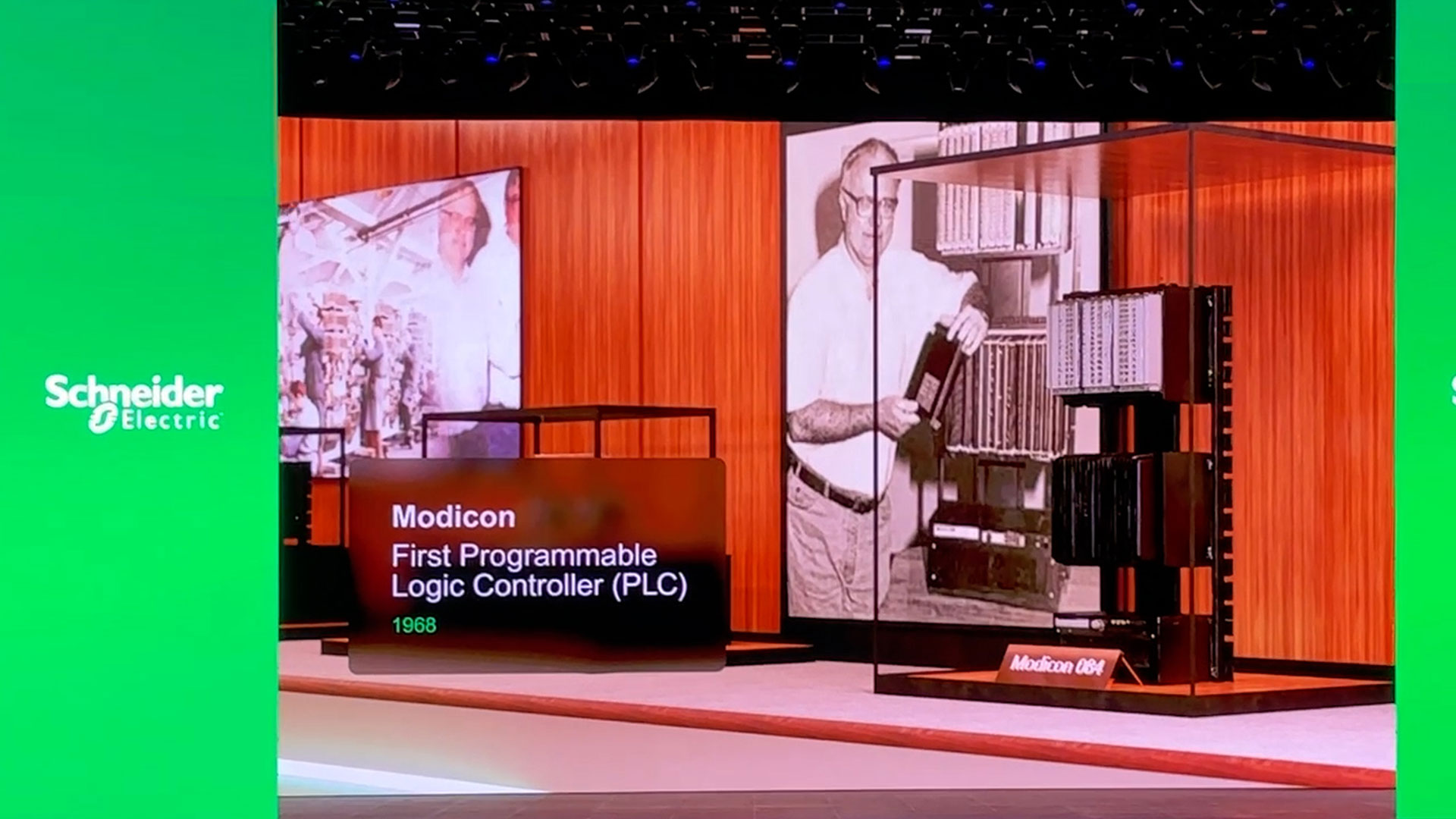
Schneider Electric’s Innovation Summit 2025: Videos, Pictures, and more!

Shawn Tierney shares his videos and pictures from Schneider Electric’s Innovation Summit 2025 in Las Vegas.

Note: Some of the below content is viewable by members only.


Slideshow from the Keynote Presentation:

Sponsored “Shorts”:


Note: To unlock the extended edition of this video become a member starting at just $5/mo here.

Keynote Opening Act: Drums:

History of Schneider Video:


Until next time, Peace ✌️ 

If you enjoyed this content, please give it a Like, and consider Sharing a link to it as that is the best way for us to grow our audience, which in turn allows us to produce more content 🙂

Shawn M Tierney
Technology Enthusiast & Content Creator

Support our work and gain access to hundreds members only articles and videos by becoming a member at The Automation Blog or on YouTube. You’ll also find all of my affordable PLC, HMI, and SCADA courses at TheAutomationSchool.com.

Shawn Tierney

(no views)

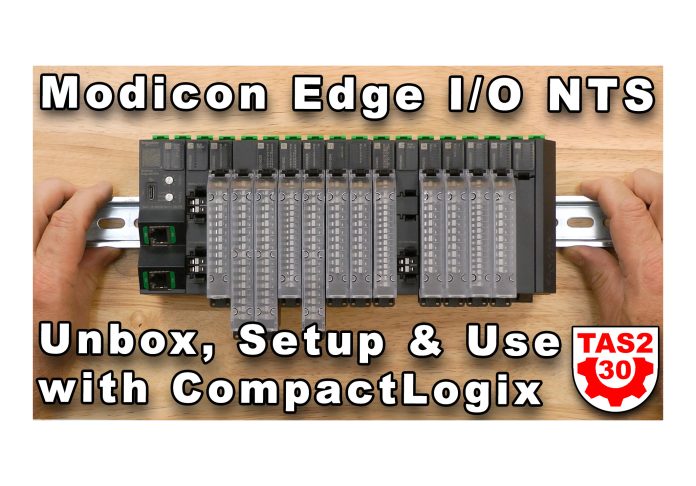
Unbox, Setup & Use Modicon Edge I/O NTS with CompactLogix

Shawn unboxes, sets up, and uses Schneider Electric’s Modicon Edge I/O NTS with Studio 5000 and CompactLogix in this episode of The Automation Show.

For any links related to this episode, check out the “Show Notes” located below the video.


Watch The Automation Show:


Note: To unlock the hundreds of exclusive videos, become a member starting at just $5/mo here.


Special thanks to Schneider Electric for sending us in the Edge I/O system, as well as sponsoring this episode! For more information about the Modicon Edge I/O NTS system, check out the below links:


Until next time, Peace ✌️ 

If you enjoyed this content, please give it a Like, and consider Sharing a link to it as that is the best way for us to grow our audience, which in turn allows us to produce more content 🙂

Shawn M Tierney
Technology Enthusiast & Content Creator

Support our work and gain access to hundreds members only articles and videos by becoming a member at The Automation Blog or on YouTube. You’ll also find all of my affordable PLC, HMI, and SCADA courses at TheAutomationSchool.com.

Shawn Tierney

(no views)

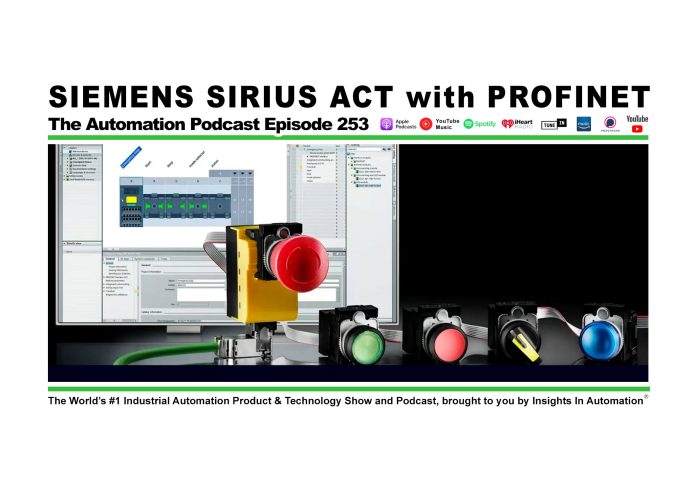
Siemens Sirius Act with Profinet (P253)

Shawn Tierney meets up with Mark Berger of Siemens to learn how Siemens integrates SIRIUS ACT devices (push buttons, selector switches, pilot lights) with PROFINET in this episode of The Automation Podcast.

For any links related to this episode, check out the “Show Notes” located below the video.


Watch The Automation Podcast from The Automation Blog:


Listen to The Automation Podcast from The Automation Blog:


The Automation Podcast, Episode 253 Show Notes:

Special thanks to Mark Berger of Siemens for coming on the show and sending us a sample!


Read the transcript on The Automation Blog: (automatically generated)

Shawn Tierney (Host): Thank you for tuning back in to the automation podcast. My name is Shawn Tierney from Insights. And today on the show, we have a special treat. We have Mark Berger back on from Siemens to bring us up to speed on serious act. He’s gonna tell us all about the product, and then we’re even gonna do a small demo and take a look at it working live.

So with that said, let’s go ahead and jump into this episode with Mark Burger from Siemens and learn all about their push buttons on PROFINET. Mark, it’s been a while since you’ve been on the show. Thank you for coming back on and agreeing to talk about this.

Mark Berger (Siemens): Oh, thank you so much. I truly appreciate you letting me be on. I appreciate your channel, and I enjoy watching it. And I’m excited to show you some of this great technology. So I’ve got, the PowerPoint up here.

We’ll just do a simple PowerPoint to kinda give you an overview, and then we’ll dive into the hardware.

Shawn Tierney (Host): Appreciate it. Thank you.

Mark Berger (Siemens): No problem. So as we stated, the Sirius X over PROFINET, let me emphasize that, the, actuators, the push buttons, the estops, the selector switches, they are all standard, when you use these. So if you have those on the shelf, the only thing that PROFINET does is that it adds, removes the normal contact blocks and adds the PROFINET, terminal blocks on the back. So every all the actuators that we’re showing are just standard actuators for the 22 millimeter push button line. So easy to use, modern design, performance and action, and extremely rugged and flexible.

The, 22 millimeter is out of the box IP 69 k, which for those who are maybe in the food and beverage, verticals would understand what that is. And that’s for direct hose down, wash down, able to handle a high pressure washing and not able to leak past the actuator into the panel. So IP 69 k is a a great place for dust and wash down and hosing and where you’re having rain and so forth, to be able to protect for a keep of any, water passing into the panel. So introduction wise, it’s, the PROFINET push buttons for us. It it is, again, the same actuators, the same, connections, and so forth, but what we’re going to exchange is the terminal blocks, for it.

So on there, I stated it’s, IP 69 k is standard. You don’t need any, extra covers forward or anything to fulfill that requirement, But it’s, it’s insensitive to dust and oil and caustic solutions, you know, like citric acid where you’re hosing down some stainless steel parts and so forth. Now what we have here is, changing out the terminal blocks that have wiring. So usually on a push button, you have two wires coming in, and then you have, for illuminated, you have two wires coming in and so forth and going out. And after you have 20 or 30 push buttons or 10 or 15 push buttons, you’ve got a substantial little bit of wiring or cabling that will be passing from the door over into the main cabinet of your control cabinet.

What we’re going to do with PROFINET push buttons is we’re going to eliminate all that wiring. And then in addition, eliminate the input and output cards that you will need for your PLC and take it down to a pro, Ethernet cable, an r j r j 45 cable, and then down to a 24 volts. And that’s all that will pass from the cabinet onto the door where you’re mounting your push buttons. So, huge, safe and cost of wires. We’re reducing all the wire outlay.

And, you know, back in the day when I build panels, it was an art how you got all the wires all nice and pretty and got them laid out and wire tied them down and so forth and just made the a piece of art on the backside. And then, it it was all done. You got it all wired. And then, of course, there was somebody that said, hey. We forgot to add another selector switch.

So you had to go back and cut all that stuff and redo the whole layout and so forth. So with PROFINET, it’s extremely flexible and easily, to adapt to if you need something, more because you’re not taking all that wiring back to the panel, passing it across the hinge of the door and so forth. It is also with a safety PLC. You do have PROFIsafe, so we can do estops on the door as you can see here in the picture, but then we can do non safe applications also. So today, we’ll be just doing some non safe applications.

And then the communications again is PROFINET. But then also just to touch real quick, we do have it on IO Link and on Aussie with our push buttons. So what is SiriusACT with PROFINET? There we go. So what you have is the first, block or interface module that you put on the back of your push button, that’s where the, Ethernet is plugged into and your 24 volts is plugged into.

And then after that, subsequently, then the push buttons that you have is that you have what we call a terminal module. And in between the, the interface module to a terminal module or from terminal module to terminal module, you can go up to one meter of cabling, and it’s a ribbon cable. And we’ll show that here shortly. And then if you have up to we can do up to 20 push buttons, terminal modules, with a total of 21 push buttons. And then so from the first interface module all the way to the last push button, you can go up to 10 meters.

And then it gives, again, 24 volt power supply for it. And we have, again, as I stated, as nonsafe, talking just PROFINET, and then the safety version, talking PROFISAFE on PROFINET. So serious act, we can go up on the the safety up to seal three and performance level e as an echo. We have, again, the the standard interface module without safety. You have the PLC, the interface module, and then the subsequent terminal modules for it.

And then the cabling that goes from the interface module to out to the terminal modules is a simple ribbon cable that comes into the back of the terminal modules. The only tool that you need is simply it’s just a screwdriver, and, you, push it into the terminal module, push down. It uses, vampire connections, insulation displacement, vampire connections, and you push it down in. There’s no stripping of the wires. There’s no mix up.

The indicator you can see on the wires here in a minute will show you that there’s a little red line that shows you, which way it, enters into the terminal, and then that’s it. It’s very straightforward. It’s, very simple with tools. And, as I stated, it’s, just like a normal push button that you’d put on, but then we’re gonna add, remove the contact block and add the terminal module or the interface module in the place of the contact block. Just to emphasize again, we can do PROFISAFE on, with a safety PLC and a safety controller, and we can give you all the safety, requirements for the either the ISO or the IEC specifications for safety out there in the field.

Here’s some of the part numbers. First one, of course, is the interface module, and that has the ability to do PROFIsafe. It has also, additionally, four digital inputs, one digital output, and then one analog input. And we’ll talk about that a little bit more just in a few minutes. And then the non safe version, 24 volts.

You have a, two versions of this one, one with just with just a standard, 24 volts input, but then there’s an additional one that has the four digital in, one digital out, and one analog in. So there’s two different part numbers. One where you don’t need the additional, digital inputs and outputs and analog, and then the and then the part number with the the additional inputs and outputs. But the safety one comes there’s no other version, just the one. Then you have what we call the terminal modules, and there’s three versions.

One terminal module is just the command module only. It’s mounted with two mechanical signaling blocks to signal. So you have two contact blocks built in. Then you have one that’s a terminal module with the command, the terminal blocks, and then also an integrated LED. And then you can put what color you want the LED to be, and you can see there the the part number changed for red, blue, amber, so on.

And then you have a just an LED module to where it’s no contactors. It’s just LED. And, I think with our demo we’re gonna show today, we’re just gonna show the contact block and LED module and only the LED module today. There’s some other, accessories with the safety. There’s a memory module to where that you, is all the configurations are put into the memory module, and something happens to that interface module.

Everything’s put in there, the IP address, the configuration, and everything. If something gets broke and so forth or you have to replace it, you pull the memory module out, put the new terminal or interface module in, plug in the memory module, cycle the power, and it’s up and running. All the configurations, the IP address, everything’s already there. And then on the interface module, it does not come with an LED, so you’re required to buy this this, LED right here if you need it for it, and that’s what you use for the interface module. And then, of course, the ribbon cable that goes between the interface module to the terminal block or terminal module and terminal module and so forth come in five meter length and 10 meter length.

K. So what’s it provide for you? Well, the benefits are, I’ll I’ll be very blunt. If it’s just one or two buttons on a panel, it won’t be that cost effective. Yes.

We’re reducing the IO, the IO inputs and outputs, but for the savings, it’s not the best. Now when you get up to about three or four push buttons, then that cost saving is, very realized. Now when you go up to 20 push buttons, yes, you’re saving a lot of money, especially in the IO cards that you’re not gonna be required to have. And then, of course, all the wiring and the labor, getting it all wired up and doing all the loop checks to make sure that when you push this button, it’s wired into the right terminal block on the IO card, so on and so forth. So about, the break is about two to three push buttons to where it will become very cost effective for you to use it.

But like I said yesterday, without PROFINET push buttons, it was all the wiring you brought across and putting them into all your IO cards and so forth. And now with PROFINET push buttons, all that goes away, and all you’re bringing across is an Ethernet cable and 24 volts positive and 24 volts negative across that hinge into the door. And that’s it. K. And then emphasizing again, we can do PROFIsafe and those, push buttons and estops.

The estop can be part of your safety circuit and give you the, safety levels that you’re required from either sill and or performance level safeties depending on the specification, IEC, or ISO that you’re following within your plant. K? And then hardware configuration. Now this is where we step into reduction of engineering and helping you guys get going, quicker and making sure engineering is done properly. You know, back in the day, we’d wire up all the wires, coming from the push buttons, you know, a selector switch, a start button, stop button, indicator lights, and so forth.

And and all those wires sometimes just, you know, the what we’re working with, all the wires look the same. You’ve put labels on them. You may have labeled it wrong, and you wired into an input card or an output card. So there’s some time where you’re over there doing some loop checks where you’re trying to say, yes. That’s coming into input byte dot bit, and that should be the selector switch.

Well, with the PROFINET push buttons, we’re able to not have to worry about that, and we’re gonna demonstrate that just here in a minute. But you also have a full lineup of the push buttons coming into portal so that you can see the lineup and verify that it is the parts that you want. In TI portal, you can see that, of course, the first, button is the interface module, and then sequentially is the terminal modules that have either just contactors, LED and contactors, or just LEDs. And we’ll we’ll show that just here momentarily. But it’s all integrated into TIA portal.

It has a visual representation of all the push buttons, and it’s simple and fast, to, configure. We’ll show you that here in just a moment. And there’s no addressing, for it. So some of the stuff that you have out there, you have addressing, making sure what the address is right, and so on. This is a standardized data management, and it’s extremely time saving and engineering saving for, the user.

Shawn Tierney (Host): Well, let me ask you a question about that. If the snow addressing, do the items show up, in the order that they’re wired? In other words, you know, you’re daisy chasing the you’re you’re going cable to cable from device to device. Is that the order that they show up?

Mark Berger (Siemens): That’s exactly right.

Shawn Tierney (Host): Okay.

Mark Berger (Siemens): So if you don’t know which ones are what, you just literally put run your hand from the interface module, follow that cable, and the next one that will be visually saw in portal will be the one that it lands on first. Perfect. And then there’s a cable that leaves that one and goes into the next one, daisy chained, and then that’s what’ll be represented in that lineup. And here in just a minute, we’ll we’ll show that. Alright.

Thank you for that question. Okay. Now once I got it wired up, how do I know that I got it wired properly? And we’re gonna show that here in just a minute. But just graphically wise, you have the ability to see if it is all wired up.

You do not need to plug it into the PLC. This all it needs is 24 volts. The PLC can come later and plugging it in later and so forth. There’s no programming. This all comes out of the box.

So once you plug it in, if all on the backside looking at the terminal blocks and the daisy chain ribbon cable, if it’s all green, you wired it up properly, and it’s working properly. But then if you see a red light flashing either at the terminal module because that will that will bubble up to the terminal module. So if you have a problem somewhere pardon me, the interface module. If you have some problem with the terminal modules, a push button like number two or three or four, it will bubble up into the, interface module to let it know, hey. We got a problem.

Can you look to see where it’s at? And as you see here, we have maybe a device that’s defective. And so it bubbles up into the interface module to let you know, and a red light lets you know that we have maybe a defective module. You know, something hammered it pretty hard, or, it may have been miswired. Then the second one down below, we’ve got a wiring error to where you don’t have the green lights on the back and everybody else’s there’s no green light shown.

That means you have a wiring error. Or if everything works great, it’s green lights across, but then the next level of this is is my push button working? So then we you’ll push or actuate the push button or actuate the selector switch, and the green light will flash to let you know that that terminal module or interface module is working properly. And we’ve done our our, loop checks right there before we’ve even plugged it into the PLC or your programmer has come out and sat down and worked with it. We can prove that that panel is ready to roll and ready to go, and you can set it aside.

And if you got four or five of the same panel, you can build them all up, power it up, verify that it’s all green lights across the board. It is. Great. Set it down. Build up another one and go on from there.

So it shows you fast fault detection without any additional equipment or additional people to come in and help you show you that. When we used to do loop checks, usually had somebody push the button, then yell at the programmer, hey. Is this coming in at I zero dot zero? Yeah. I see it.

Okay. Or then he pushed another one. Hey. Is this coming in on I 0.one? No.

It’s coming in on i0. Three. So there was that two people and then more time to do that loop check or the ring out as some people have called it. So in this case, you don’t need to do that, and you’ll see why here in just a minute. And then, again, if we do have an interface module that, maybe it got short circuited or something hit it, it you just pull the ePROM out, plug it into the new one, bring in the ribbon cable, and cycle the power, and you’re up and running.

Alright. And then this is just some of the handling options of how it handles the data, with the projects and so forth, with basic setups, options that you can be handling with this, filling bottles. What we wanna make sure to understand is that if maybe push buttons, you can pick push buttons to work with whatever project you want it to do. So if you have six push buttons out there, two of them are working on one, bottle filling, and then the rest of them are working on the labeling, you can separate those push buttons. Even though that they’re all tied together via PROFINET, you can use them in different applications across your machine.

Shawn Tierney (Host): You’re saying if I have multiple CPUs, I could have some buttons in light work with CPU one, PLC one, and some work with PLC two?

Mark Berger (Siemens): Yep. There’s handling there. There’s programming in the backside that needs to be done, but, yes, that can happen. Yep. Oh, alright.

So conclusion, integrated into TI portal. We’re gonna show that here in a minute. So universal system, high flexibility with your digital in, digital outs, analogs, quick and easy installation, one man, one hand, no special tooling, and then substantially reducing the wiring and labor to get it going. And then, again, integrated safety if, required for the your time. So with that, let’s, switch over to TI portal.

So I’ve already got a project started. I just called it project three. I’ve already got a PLC. I’ve got our, new g, s seven twelve hundred g two already in. And then what I’m gonna do is I’ve, already built up the panel.

And, Shawn, if you wanna show your panel right here.

Shawn Tierney (Host): Yeah. Let me go ahead and switch the camera over to mine. And so now everybody’s seeing my overhead. Now do you want me to turn it on at this point? It’s off.

Yeah. Yeah.

Mark Berger (Siemens): Let’s do it.

Shawn Tierney (Host): Gonna turn it on, and all the lights came on. So we have some push buttons and pilot lights here, but the push buttons are illuminated, and now they’ve all gone off. Do you want me to show the back now?

Mark Berger (Siemens): Yep. So what we did there is that we just showed that the LEDs are all working, and that’s at the initial powering up of the 24 volts. Now we’re gonna switch over and, you know, open up the cabinet and look inside, and now we’re looking on the backside. And if you remember in the PowerPoint, I said that we’d have all green lights, the everything’s wired properly. And as you look, all the terminal modules all have green lights, and so that means that’s all been wired properly.

If you notice, you see a little red stripe on the ribbon cable. That’s a indication. Yep. To show you that. And then if you look on the on the out on the, the interface module, Shawn, there’s it says out right there at the bottom.

Yeah. There’s a little dot, and that dot means that’s where the red stripe goes, coming out. So that little dot means that’s where the red stripe comes. Yep. Right there.

And that’s how it comes out. And then if you look just to the left a little bit, there’s another, in, and there’d be a red dot underneath that ribbon cable showing you how the red the the red goes into it. Notice that everything’s clear, so you can see that the wire gets engaged properly all the way in. And then all you do is take a screwdriver and push down, and then the vent, comes in. The insulation displacement comes in and, and, makes the connections for you.

So there’s no strip tie cable stripping tools or anything special for doing that. Another item, just while we’re looking, if you look in the bottom left hand corner of that terminal module, you see kind of a a t and then a circle and then another t. That’s an indicator to let you know that that’s two contactors and an LED that you have on the backside.

Shawn Tierney (Host): We’re talking about right here?

Mark Berger (Siemens): Yep. Yep. Right there.

Shawn Tierney (Host): Okay.

Mark Berger (Siemens): So that’s an indicator to tell you what type of terminal block it is a terminal, block that it is. That’s two contactors and LED. And then if you look at one in the bottom left hand corner, there’s just a circle. That means you just have an LED. So you have some indicators to show you what you’re looking at and so forth.

So today, we’re just using the two, LED only, and then we’re doing the contactor and LED combination. I I don’t have one there on your demo that’s just the contactor. So

Shawn Tierney (Host): Now you were telling me about these earlier. Yeah.

Mark Berger (Siemens): So yeah. The so if you look there on that second row of the terminal blocks, you have a UV and an AI, and I’ll show that in the schematic here in just a little bit, but there, that is a 10 volt output. If you put a 250 ohm or 250 k ohm, potentiometer and then bring that signal back into AI, you have an analog set point that comes in for it that will automatically be scaled zero to 1,000 count or zero to 10 volts. Mhmm. And then you can use that for a speed reference for a VFD.

And it’s already there. All you have to do, you don’t have to scale it or anything. You can put it towards, you know, okay. Zero to 1,000 count means zero to 500 PSI or or zero to 100 feet per second on a conveyor belt, and I’m I’m just pulling numbers out. But that’s the only real scalability scaling you have to do.

So it’ll be a zero to 1,000 count is what you’ll see instead of, like, yep. Then you got four digital ins that you can use and then a one digital out. Now the four, I, kinda inquired wife just four, but let’s say that you have a four position joystick. You could wire all four positions into that interface module, and then the output could be something else for a local horn that you want or something to that case with it. So you in addition to the, push buttons, you also have a small, distribution IO block right there in the in your panel.

Shawn Tierney (Host): Which is cool. Yeah. I mean, maybe yeah. Like you said, maybe you have something else on the panel that doesn’t fit in with, you know, this line of push buttons and pilot lights like a joystick. Right?

And that makes a lot of sense. You were saying too, if I push the button, I can test to see if it’s working.

Mark Berger (Siemens): Correct. So if you yep. Go right ahead.

Shawn Tierney (Host): I’m pushing that middle one right there. You can see it blinking now.

Mark Berger (Siemens): And that tells you that the contacts have been made, and it’s telling you that the contacts work properly.

Shawn Tierney (Host): And now I’m pushing the one below it. So that shows me that everything’s working. The contacts are working, and we’re good to go.

Mark Berger (Siemens): Yep. Everything’s done. We’ve done the loop checks. We know that this is ready to be plugged into the PLC and handed off to whomever is going to be, programming the PLC and bring it in, in which means that we’ll go to the next step in the TI portal.

Shawn Tierney (Host): Yeah. Let me switch back to you, and we’re seeing your TI portal now.

Mark Berger (Siemens): Awesome. Okay. So I’ve got the PLC. I’ve plugged it in to if if I needed an Ethernet switch or I’ve plugged it directly into the PLC. Now I have just built up that panel.

I haven’t had anything, done with it for an IP address because it is a TCP IP protocol. So we need to do a IP address, but it’s on PROFINET. And then I’m gonna come here to online access, and I wanna see that I can see it out there that I’m talking to it. So I’m gonna do update accessible devices. It’s gonna reach out via my, Ethernet port on my laptop.

And then there’s our g two PLC and its IP address. So that’s that guy right here. Mhmm. And then I have something out there called accessible devices, and then this is its MAC address. So what I and I just have those two items on the network, but, you know, you could have multiples as, you know, with GI portal.

We can put an entire machine in one project. So I come here and drop that down, and I go to online diagnostics. I I go online with it, but I don’t have really a lot here to tell me what’s going on or anything yet. But I come here, and I say assign IP address. And I call one ninety two, one sixty eight, zero zero zero, and zero ten zero, and then our usual 255, two fifty five, two fifty five, and then I say assign IP address.

Give it a second. It’s gonna go out and tell it, okay. You’re it. Now I wanna see if it took, and you look right there, it took. And I’m I’m kinda anal, so I kinda do it again just to verify.

Yep. Everything’s done. It’s got an IP address. Now I’m gonna come up, and I’m going to go to my project, and I’m gonna switch this to new network view. Here’s my PLC.

I’m gonna highlight my project. Now there’s two ways I can go about it, and I’m sure, Shawn, you’ve learned that Siemens allows you to kinda do it multiple ways. I could come in here and go into my field devices, and I could come into my commanding and interface modules, and I’d start building my push button station. But we’re gonna be a little oh and ah today. We’re gonna highlight the project.

I’m gonna go to online, and I’m gonna come down here to hardware detection and do PROFINET devices from network. Brings up the screen to say, hey. I want you to go out and search for PROFINET industrial Ethernet. Come out via my, NIC card from my laptop, and I want you to start search.

Shawn Tierney (Host): For those of you who watched my previous episodes doing the e t 200 I o, this is exactly the same process we used for that.

Mark Berger (Siemens): Yep. And I found something out there that I know I gave the IP address, but it doesn’t have a PROFINET name yet. So that’s okay. I’ve I got the IP address. We’ll worry about the PROFINET name.

So we’ll hide check mark this, and this could be multiple items.

Shawn Tierney (Host): Mhmm.

Mark Berger (Siemens): K. So now add device.

Shawn Tierney (Host): And this is the sweet part.

Mark Berger (Siemens): And right here, it’s done. It went out, interrogated the interface module, and said, okay. Are you there? Yep. I’m here.

Here’s my IP address. And it also shared with it all of come in here, double click on it now.

Shawn Tierney (Host): The real time saver. Yep.

Mark Berger (Siemens): Yep. And then now here’s all the push buttons in your thing. And let me zoom that out. It’s at 200%. Let’s go out to a 100.

And now it already interrogated the interface module and all the terminal modules to tell me what’s in my demo. Yep. And again, as you stated in your questions, how do I know which one’s the next one? You just saw the ribbon cable Mhmm. And then it brings you so forth and so on.

So that’s done. We’re good. I’m gonna go back to my network view, and I’m gonna say, hey. I want you to communicate via PROFINET to there, which I’m done. And then it also gives you here’s the PLC that you’re gonna do because, you know, if we have a big project, we may have four or five of these stations, and you wanna know which PLC is the primary PLC on it.

And then we’ve done that. I’m going to quickly just do a quick compile. And next, I’m gonna come here. I’m gonna click here. Now I could just do download and and let the PROFINET name, which is here, go into it.

But I’m gonna right click, and I’m gonna say assign device name and say update list. It’s gonna go interrogate the network. Takes a second. No device name assigned. No PROFINET name.

So this is how we do that time determinism with PROFINET. So I’m gonna highlight it, and I say assign the name, and it’s done. Close. So now it has a PROFINET name and IP address. So now I’m able to go in here and hit download and load.

And we’re going to stop because we are adding hardware, so we are putting the CPU in stop and hit finish. Now I always make sure I’m starting the CPU back up and then hit finish. And then I’m gonna go online, go over here and show network view, and go online. And I got green balls and green check marks all over the board, so I’m excited. This works out.

Everything’s done. But now what about the IO? So now your programmer is already talking to it, but now I need to know what the inputs and outputs are. So go back offline, double click here, and then I’m gonna just quickly look at a couple things. The interface modules IO tags are in a different spot than the terminal modules.

So just a little note. It’s right here. If you double click on integrated I LED, you click here and then go to properties and say IO tags. There it lists all of the inputs and outputs. So it comes here.

But if I do a terminal module, click here, then once you just click on it in general oops. Sorry. In general, it’s right here in the IO addressing. There’s where it starts start the bytes, but then I come here to tags, and then here’s the listing. So the the the programs automatically already allocated the byte and the bit for each of these guys.

So if I click there, there, click there, there’s it there, onward and upward. Now notice that the byte so if I click on position four, it is three. So it’s one one less because the base zero versus here, it’s five. Just give me a little bit of a so if you look in here, all that starts at I four dot zero. I four dot zero.

So k. So that’s there. So I’m gonna come here. I’m gonna go to the selector switch for this, and I’ve called it s s one, and that’s input two dot zero. Then I’m gonna click here, and I’m gonna call this green push button.

Notice there’s two inputs because I have one contactor here, one contactor there, and 30 and 31. So then what I’m gonna do is that I’m going to go over here to the PLC, and I’m gonna go to and it’s updated my PLC tag table. There you go. It’s in there. So then I’m gonna grab that guy.

I’m gonna because portal pushes you to use two monitors. I’m gonna come here, go to the main OB, and then I’m gonna just grab a normally open contact, drag it on, drop it, put it in there we go. And then I’m gonna grab selector switch and drop that right there, and grab green LED and drop that right there, and then close that out and compile. And everybody’s happy. I’m gonna download and say yes.

Okay. And then I’m gonna go online. Alright. So it’s waiting in for me to switch that, and there you go. And if you wanna see my screen there, Shawn, that’s the green light is turned on.

Shawn Tierney (Host): Yeah. Let me switch over to Okay. Bring up your, alright. And could you switch it back off now?

Mark Berger (Siemens): Yeah. No problem. Yep. So there we go. We switch it off.

We switch it on. Now I wanna show you something kinda cool. If I turn that off and I come back here and I go offline Mhmm. I have a indicator light that needs to flash to let the operator know that there’s something here I need you to attend to. So we used to put in some type of timer.

Right? Mhmm.

Shawn Tierney (Host): Mhmm.

Mark Berger (Siemens): And so what we would do here instead of that, I’m gonna come back down here to my tab and go to the hardware config. I’m gonna double click here. I’m gonna go to module parameters, and I’m gonna drop this down, and I’m gonna put it at two hertz. Also, just to point out, I can also do a normally open contact and a normally closed contact and switch them. You see right here.

Cool. And I can control the brightness of the LED if it has an LED, and it’s all hard coded into it. So once I’ve done that, do a quick compile. I’m I mean, you know, I’ve always compile and then do download. Mhmm.

Mhmm. So we’re gonna download that and hit load and finish. K. Here we go. Turn that on, and now it’s flashing.

Shawn Tierney (Host): That’s great. So you have a timer built in. If you need to flash, you don’t have to go get a clock bit or create your own timer. Plus, if it’s a button, you can change the contacts from normally open to normally closed. That is very cool.

Mark Berger (Siemens): Yep. And that is PROFINET push buttons. As I stated let me quickly pull that up. Remember, you pointed out just a few minutes ago, here is the wiring diagram for that. So here’s the back of that with the terminal blocks.

And you come down here, and it shows you that you just wire in that, variable resistor or a potentiometer. And you see m and you there’s the 10 volts, and then the signal comes into a. And then that guy is right here. Excellent. So if you come here, you go to properties and IO tags, and it comes in on I 60 fours and input and IO tags, and then I could call that a pot.

Yeah. And now you have a potentiometer that you can use as a a speed reference for your VFD. That is very cool. Engineering efficiency, we reduced wiring. We don’t have all the IO cards that is required, and we have the diagnostics.

Emphasize that each of these here, their names, you can change those if you would like because this is your diagnostic string. So if something goes wrong here, then it would come up and say commanding. So you double click here, and we go here to general, and it’ll say commanding and underscore LED module two, or you can you can call that start conveyor p b. And then that would change this. Now see this changed it.

This would be your diagnostic string to let you know if if that button got damaged or is not working properly.

Shawn Tierney (Host): You know, I wanted to ask you too. If I had, let’s say I needed two potentiometers on the front of the enclosure, could I put another interface module in the system? Even if it didn’t have any push buttons on it or pilots on it, could I just put it in there to grab, some more IO?

Mark Berger (Siemens): Yep. Yes, sir. I have a customer that he uses these as small little IO blocks.

Shawn Tierney (Host): Yeah. I mean, if you just needed a second pot, it might make sense to buy another interface module and bring it into that than buying an analog card. Right? Assuming the resolution and everything was app you know, correct for your application, but that’s very cool. I you know, it it really goes in line with all the videos we’ve done recently looking at e t 200 I o, all the different flavors and types.

And when you walk through here, you know, I’m just so especially, thankful that it reads in all the push buttons and their positions and pilot lights. Because if you have this on your desk, you’re doing your first project, you can save a lot of dragging and dropping and searching through the hardware catalog just by reading it in just like we can read in a rack of, like, e t 200 SPIO.

Mark Berger (Siemens): Yep. Engineering efficiency, reducing wiring, reducing time in front of the PC to get things up and running. You saw how quickly just a simple push button and a and, you know, again, a simple start and turn that on and off the races we went.

Shawn Tierney (Host): Well, Mark, I really wanna thank you. Was there anything else that we wanted to cover before we close out the show?

Mark Berger (Siemens): Nope. That’s just about it. I think, we got a little bit to have your your viewers, think about for it. So I appreciate the time, and I really appreciate you allowing me to show this. I think this is a a really engineering efficiency way of going about using our push buttons and and, making everybody’s projects in a timely manner and getting everything done and having cost savings with it.

Shawn Tierney (Host): Well, and I wanna thank you for taking the time out of your busy day, not only to put together a little demo like you have for me to use here in the school, but also to come on and show our audience how to use this. And I wanna thank our audience. This was actually prompted from one of you guys out there at calling in or writing in. I think it was on YouTube somewhere and saying, hey. Could you cover the PROFINET push buttons from Siemens?

I didn’t even know they had them. So thanks to the viewers out there for your feedback that helps guide me on what you wanna see. And, Mark, this would not be possible if it wasn’t for your expertise. Thank you for coming back on the show. I really appreciate it.

Mark Berger (Siemens): Thank you, Shawn. All the best. Thank you.

Shawn Tierney (Host): I hope you enjoyed that episode. And I wanna thank Mark for taking time out of his busy schedule to put together that demo and presentation for us and really bring us up to speed on Sirius X. And I wanna thank the user out there who put a comment on one of my previous videos that said, hey. Did you know Siemens has this? Because I wouldn’t have known that unless you said that.

So thank you to all you. I try to read the comments every day or at least every two days, and so I appreciate you all wherever you are, whether you’re on YouTube, the automation blog, Spotify, iTunes, Google Podcasts, and wherever you’re listening to this, I just wanna thank you for tuning in. And now with next week being Thanksgiving, we’ll have a pause in the automation show, then we have some more shows in December, and we’re already filming episodes for next year. So I’m looking forward to, releasing all those for you. And if you didn’t know, I also do another podcast called the History of Automation.

Right now, it’s only available on video platforms, so YouTube, LinkedIn, and the automation blog. Hopefully, someday we’ll also do it on, audio as well. But, we’re meeting with some of the really legends in automation who worked on some of the really, you know, just really original PLCs, original HMIs, up and through, like, more modern day systems. So it’s just been a blast having these folks on to talk about the history of automation. And so if you need something to listen to during Thanksgiving week or maybe during the holidays, check out the history of automation.

Again, right now, it’s only available on YouTube, the automation blog, and LinkedIn, but I think you guys will enjoy that. And I wanna wish you guys, since I won’t be back next week, a very happy Thanksgiving. I wanna thank you always for tuning in and listening, and I also wanna wish you all good health and happiness. And until next time, my friends, peace.


Until next time, Peace ✌️ 

If you enjoyed this content, please give it a Like, and consider Sharing a link to it as that is the best way for us to grow our audience, which in turn allows us to produce more content 🙂

Shawn M Tierney
Technology Enthusiast & Content Creator

Support our work and gain access to hundreds members only articles and videos by becoming a member at The Automation Blog or on YouTube. You’ll also find all of my affordable PLC, HMI, and SCADA courses at TheAutomationSchool.com.

Shawn Tierney

(no views)

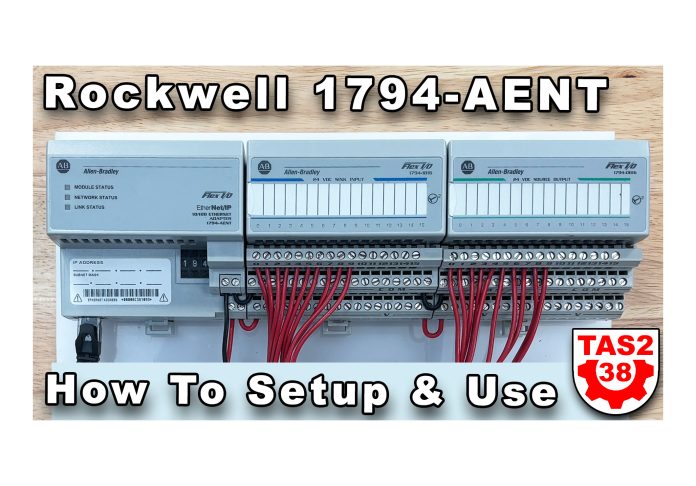
How To Setup and Use the 1794-AENT

Shawn shows how to setup and use the 1794-AENT in Studio 5000 on today’s The Automation Show Lunchtime Livestream.

For any links related to this episode, check out the “Show Notes” located below the video.


Watch The Automation Show: (live at 12:20pm ET)


Note: To unlock the hundreds of exclusive videos, become a member starting at just $5/mo here.


Notes: Links mentioned in the product show:


Until next time, Peace ✌️ 

If you enjoyed this content, please give it a Like, and consider Sharing a link to it as that is the best way for us to grow our audience, which in turn allows us to produce more content 🙂

Shawn M Tierney
Technology Enthusiast & Content Creator

Support our work and gain access to hundreds members only articles and videos by becoming a member at The Automation Blog or on YouTube. You’ll also find all of my affordable PLC, HMI, and SCADA courses at TheAutomationSchool.com.

Shawn Tierney

(no views)

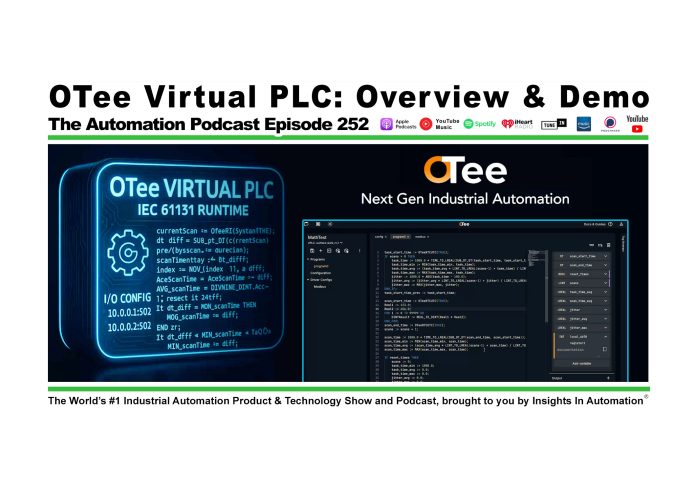
OTee Virtual PLCs (P252)

Shawn Tierney meets up with Henrik Pedersen and Jacob Abel to learn about OTee Virtual PLCs in this episode of The Automation Podcast.

For any links related to this episode, check out the “Show Notes” located below the video.


Watch The Automation Podcast from The Automation Blog:


Listen to The Automation Podcast from The Automation Blog:


The Automation Podcast, Episode 252 Show Notes:

Special thanks to Henrik Pedersen and Jacob Abel for coming on the show, and to OTee for sponsoring this episode so we could release it “ad free!” To learn about the topics discussed in this episode, checkout the below links:


Read the transcript on The Automation Blog: (automatically generated)

Shawn Tierney (Host): Thank you for tuning back into the automation podcast. Shawn Tierney here from Insights. And this week on the show, I meet up with Henrik Pedersen and Jacob Abel to learn all about virtual PLCs from OTee. That’s o t e e. And, I just thought it was very interesting.

So if you guys have ever thought about maybe running virtual PLCs to test some processes out, I think you’ll really enjoy this. With that said, I wanna welcome to the show for the very first time, Hendrik and Jacob. Guys, before we jump into your presentation and learn more about what you do, could you first introduce yourself to our audience?

Henrik Pedersen (OTee): Yeah. Sweetly. So my name is Hendrik. I am the cofounder, COO, OT, a new industrial automation company, that, we’re really glad to present here today. I have a background from ABB.

I worked eleven years at ABB. In terms of education, I have an engineering degree and a master degree in industrial economics. And, yeah, I’m I’m excited to be here. Thanks, Rom. And I’ll pass it over to Jake.

Jacob Abel (Edgenaut): I’m, Jacob Abel. I’m the principal automation engineer at Edgnot. EdgeNaught is a systems integrator focusing on edge computing and virtual PLCs. My background is in mechanical engineering, and I’m a professional control systems engineer, and I have thirteen years experience in the machine building side of industrial automation, specifically in oil and gas making flow separators. And I’ll hand it back to Henrik here.

Henrik Pedersen (OTee): K. Great. So OT, we are a a new industrial automation company, the new kid on the block, if you will. We’re a start up. So, we only started, about three years ago now.

And, we focus solely on virtual PLCs and and the data architectures allow you to integrate virtual PLCs in in operations. And, you know, some of the listeners will be very familiar with this first, thing I’m gonna say, but I think it’s valuable to just take a take a little bit step back and and remember what has happened in in history when when it comes to to IT and OT and, and and what really what really happened with that split. Right? So it was probably around the ‘9 you know, around nineteen nineties where the the the domain computer science were really split into these two domains here, the IT and OT. And, and that, that was, that was kind of natural that that happened because we got on the, on the IT side of things, we got Internet, we got open protocols and, you know, we had the personal computers and innovation could truly flourish on the IT side.

But whereas on the OT side, we were we were kind of stuck still in the proprietary, hardware software lock in situation. And and that has that has really not been solved. Right? That that that is still kind of the the situation today. And it this is what this is obviously what also, brought me personally to to really got really super motivated to solve this problem and and really dive deep into it.

And I experienced this firsthand with with my role in NAD and, how how extremely locked we are at creating new solutions and new innovation on the OT side. So so we’re basically a company that wants to to truly open up the the the innovation in this space and and make it possible to adopt anything new and new solutions, that that sits above the PLC and and, you know, that integrate effectively to to the controller. So I I have this this, you know, this slide that kind of illustrates this point with with some some, you know, historical events or or at least some some some big shifts that has happened. And, Aurene mentioned a shift in nineteen nineties. And it wasn’t actually until ’20, 2006 that Gartner coined this term OT, to explain the difference really what what has happened.

And and, you know, as we know, IT has just boomed with innovation since since the nineties and OT is, is, is slowly, slowly incrementally getting better, but it’s still, it’s still the innovation pace is really not, not fast. So, this is also, of course, illustrated with all the new developments in in GenAI and AgenTic AI, MCP, and things like that that is kinda booming on on the IT side of things. And and and yeah. So, but we do believe that there is actually something happening right now. And and we have data that they’re gonna show for for that.

Like, the the large incumbents are now working on this as well, like virtual PLCs, software defined automation and all kinds of exciting things going on on the OT side. So we do believe that that we will see, we will see a shift, a true big shift on the OT side in terms of innovation, really the speed in which we can, we can improve and adopt new solutions on the OT side. And this is kind of exemplified by, like, what what is the endgame here? Like, you could say that the endgame could be that IT and OT once once again becomes the same high paced innovation domain. Right.

But then we need to solve those underlying problems, the infrastructural problems that are still so persistent on the OT side of things. The fine point of this slide is to just illustrate what’s happening right now. It’s like cloud solutions for control is actually happening. Virtual PLC, software based automation, AI is happening all at once. And we see it with the big suppliers and and also the exciting startups that’s coming into this space.

So I think there’s there’s lots of great excitement now that we can we can expect from the OT side, in in next few years.

Shawn Tierney (Host): Yeah. You know, I wanna just, just for those listening, add a little, context here. If we look at 1980, why was that so important? Why is this on the chart? And if you think about it, right, we got networks like Modbus and, Data Highway in nineteen seventy eight, seventy nine, eighty.

We also got Ethernet at that time as well. And so we had on the plant floor field buses for our controls, but in the offices, people were going to Ethernet. And then when we started seeing the birth of the public Internet, right, we’re talking about in the nineties, people who are working on the plant floor, they were like, no. Don’t let the whole world access by plant floor network. And so I think that’s where we saw the initial the the divide, you know, was 1980.

It was a physical divide, just physically different topologies. Right? Different needs. Right? And then and and as the Internet came out in the early nineties, it was it was now like, hey.

We need to keep us safe. We know there’s something called hackers on the Internet. And and I think that’s why, as you’re saying in 2006, when Gartner, you know, coined OT, we were seeing that there was this hesitant to bring the two together because of the different viewpoints and the the different needs of both systems. So I think it’s very interesting. I know you listeners, you can’t see this, but I kinda want to go back through that and kinda give some context to those early years.

And and, you know, like Henrik says, you know, now that we’re past all that, now that we’re using Ethernet on the plant floor everywhere, right, almost everywhere, on all new systems, definitely, that that becomes the right now on this on the today on the, on the chart. And I’ll turn it back to you, Henrik.

Henrik Pedersen (OTee): Yeah. I’ll search that. I just wanna echo that as I think that there are really good reasons for why this has happened. Like, the there has you could argue that innovation could flourish on the IT side because there was less critical systems, right, less, more, you know, you can do to fail fast and you can do, you can test out things on a different level. And so so there’s really lots of good reasons for why this has happened.

We do believe that right now there is some really excitement around innovation, the OT side of things and and this pent up kind of, I wouldn’t call it frustration, but this pent up potential, I think is the right word, is is can be kind of unleashed in our industry for for the next, next decade. So so we are like this is really one of the key motivators for me personally. It’s, like, I truly believe there’s something truly big going on right now. And and I I do I do encourage everyone, everyone listening, like, get in get in on this. Like, this is happening.

And, you know, be an entrepreneur as well. Like, build your company, build and, you know, create something new and exciting in this space. I think I think this is this is a time that there hasn’t been a better time to create a new new technology company or a new service company in this space. So this this, this is something at least that motivates me personally a lot. So let me move over to kind of what we do.

I mentioned I mentioned that we focus solely on the virtual PLC. This this is now presented in the slide for those that are listening as a as a box inside a open hardware. We can deploy a virtual PLC on any, ARM thirty two thirty two and and sixty four bit processor and x eighty six sixty four bit with the Linux kernel. So so there are lots of great, options to choose from on the hardware side. And and, and yeah.

So you can obviously when you have a Virtual PLC you can think of it new in terms of your system architecture. You could for instance, you know deploy multiple Virtual PLCs on this on the same hardware and you can also, think about it like you can use a virtual PLC in combination with your existing PLCs and could work as a master PLC or some kind of optimization deterministic controller. So it’s it’s really just opening up that, you know, that architectural aspect of things. Like you can think new in terms of your system architecture, and you have a wide range of hardware to choose from. And, and yeah, So the the flexibility is really the key here, flexibility in how you architect your system.

That CPU that you deploy on will will obviously be need to be connected to to the field somehow, and that’s that’s true, classical remote IO, connections. So we currently support, Modbus TCP and Ethernet IP, which is kind of deployed to to, our production environment, as it’s called. So moving on to the next slide. Like, this is kind of the summary of our solution. We have built a cloud native IDE.

So meaning anyone can can basically go to our website and log in to into the solution and and give it a spin. And, we’ll show you that afterwards with with Jake. And the system interacts through a PubSub data framework. We use a specific technology called NUTS, for the PubSub communication bus. And you can add MQTT or OPC UA to the PubSub framework, according to your needs.

So, and from that, you can integrate with, whatever whatever other, software you might have, in your system. So we have these value points that we always like to bring up. Like, this obviously breaks some kind of vendor lock in in terms of the hardware and the software. But it’s also, our virtual PLC is based on on the six eleven thirty one. So it’s not a lock in to any kind of proprietary programming language or anything like that.

There is, there’s obviously the cost, element to this that you can potentially save a lot of cost. We have, we have verified with with with some of our customers that they estimate to save up to 60% in total cost of ownership. This is there is obviously one part is the capex side and the other part is is the opex. And and is this data framework, as I mentioned, is in in in which itself is is future proof to some extent. You can you can integrate whatever comes comes in in a year or or in a few years down the line.

And, there’s environmental footprint argument for this as you can save a lot on the on the infrastructure side. We have one specific customer that estimates to save a lot on and this this particular point is really important for them. And then final two points is essentially that we have built in a zero trust based security, principle into this solution. So we have role based access control. Everything is encrypted end to end, automatic certification, and things like that.

The final point is, is that this is the infrastructure that allows you to bring AI and the classical, DevOps, the the thing that we’re very used to in the IT side of things. Like, you you commit and merge and release, instead of, instead of the traditional, way of working with your automation systems. So I know this is like, this is pro pretty much, like, the boring, sales pitch slide, but, but, yeah, I just wanted to throw this this out there for for the guys that there is some there is some, intrinsic values underneath here. The way the system works, you will you will see this very soon, through the demo, but it’s basically you just go to a website, you log in, you create a project. In there, you would create your your PLC program, test, you code, you simulate.

You would onboard a device. So onboard that Linux device that you you want to deploy on. This can be as simple as a Raspberry Pi, or it can be something much more industrial grade. This depends on on on the use case. And then you would deploy services like, as I mentioned, MQTT and OPC UA, and then you would manage your your your system from from the interface.

And, I have this nice quote that we got to use from one of the customers we had. This is a global, automotive manufacturer that, basically tells us that it’s, they they highlighted the speed in which you can set this up, as as one of the biggest values for them, saving them a lot of hours and setting setting up the system. So I also wanted to show you a real you know, this is a actual real deployment. It was it was deployed about a year ago, and this is a pump station, or a water and wastewater operator with around 200 pump stations. They had a mix of of Rockwell and Schneider PLCs, and they had a very high upkeep, and they were losing a lot of data from these stations because they were connected over four g.

When the Internet was a bit poor, they lost a bit of data in their SCADA systems, so they had these data gaps and things like that. So pretty pretty, you know, standard legacy setup to be to be honest. Quite outdated PLCs as well. So what they what they did for the first, pump station was they they, you know, removed the PLC. They put in a Raspberry Pi for for, like, €60 or, like, $70, connected it to to a to a remote IO Ethernet IP module they had, in in the storage, and deploy this data framework as I’m showing on the screen now.

So so they that was that was the first station they put online, and they they chose a Raspberry Pi because they thought, okay, this is interesting, but will it work? And then they chose a pump station, which was was really just poor from before. So they had very little to to to lose to to deploy on this station. So so, yeah, this has been running for a year now without any any problems on a Raspberry Pi. We have obviously advised against using a Raspberry Pi in a critical environment, but they just insisted that that what that’s what they wanted to do for this first case.

Shawn Tierney (Host): And I’ll back that up too. Your generic off the shelf Raspberry Pi is just like a generic off the shelf computer. It’s not rated for these type of environments. Not that all pump houses are really bad, but they’re not air conditioned. And I think we’ve all had that situation when it’s a 120, 130 out that, you know, off the shelf computer components can act wonky as well as when they get below freezing.

So just wanted to chime in there and agree with you on that. For testing, it’s great. But if you’re gonna leave it in there, if you were in my town and you say you’re gonna leave that in there permanently, I would ask to have you, assigned somewhere else for the town.

Henrik Pedersen (OTee): Yeah. Yeah. Exactly. No. So and and that point is also illustrated with the second station they brought online.

So there they chose a much more industrial grade CPU, that, that, was much, you know, cost cost a bit more, but it’s more suited for the environment. And, and yeah. So this was, I can disclose it was a Bayer Electronics, CPU. So so yeah. And, and they reported, some good, good metrics in terms of, like, the results.

They they said around 50 on the hardware, 75% on the management of the PLC system. So this relates more to that they have very a lot of, you know, driving out with the car to these stations and doing changes to their systems and, and updates. They no longer have any, any data loss. It’s local buffer on the data framework. They’ve increased tag capacity with 15 x, resulting in in four fifty five x better data resolution and a faster scan frequency.

And this is actually on the Raspberry Pi. So so just just think of it as as the the even the even the, kind of the lowest quality IT off the shelf, computers, are are able to to, to execute really fast in in in, or fast enough for for, for these cases. So, Shawn, that was actually what I wanted to say. And, and also, you know, yeah, we are we are a start up, but we do have, fifth users now in 57 different countries across the world. And it’s it’s really cool to see our our our, our technology being deployed around the world.

And, and yeah. I’m really, really excited to to, to get more, users in and and hear what they what they, think of the solution. So so yeah. I’ll I’ll with that, I don’t know if, Shawn, you wanna you shoot any questions or if we should hand it over to Jake for for for a demo.

Shawn Tierney (Host): Yeah. Just before we go to Jake, if somebody who’s listening is interested, this might be a good time. It said that, you already talked about being cloud based. It’s, o t e e. So Oscar Tom, Edward Edward for the the name of the company.

Where would they go if if they like what Jake’s gonna show us next? Where will they go to find out more?

Henrik Pedersen (OTee): Yeah. So I would honestly propose that they just, reach out to to me or Jake, on on one of the QR codes that we have on the presentation. But they can also obviously go to our website, 0t.io,0tee.io, and just, either just, log in and test the product, or they could reach out to us, through our website, through the contact form. So yeah.

Shawn Tierney (Host): Perfect. Perfect. Alright, Jake. I’ll turn it over to you.

Jacob Abel (Edgenaut): Thanks, Shawn. Fantastic stuff, Henrik. I wanna take a second too to kinda emphasize some of the technical points that you, presented on. Now first, the the fact that you have the built in zero trust cybersecurity is so huge. So, I mean, the OT cybersecurity is blowing up right now.

So many certifications, you know, lots of, consulting and buzz on LinkedIn. I mean, it’s a very real concern. It’s for a good reason. Right? But with this, zero trust built in to the system, I I mean, you can completely close-up the firewall except for one outgoing port.

And you have all the virtual PLCs connected together and it’s all done. You know, there’s no incoming ports to open up on the firewall to worry about, you know, that security concern. You know, it’s basically like, you know, you’ve already set up a VPN server, if you will. It’s it’s not the same, but similar and, you know, taking care of that connection already. So there’s an immense value in that, I think.

Shawn Tierney (Host): And I wanted to add to the zero trust. We’ve covered it on the show. And just for people, maybe you’ve missed it. You know, with zero trust is you’re not trusting anyone. You authorize connections.

Okay? So by default, nobody’s laptop or cell phone or tablet can talk to anything. You authorize, hey. I want this SCADA system to talk to this PLC. I want this PLC to talk to this IO.

I want this historian to talk to this PLC. Every connection has to be implicitly I’m sorry. Explicitly, enabled and trusted. And so by default, you know, an an integrator comes into the plant, he can’t do anything because in a zero trust system, somebody has to give him and his laptop access and access to specific things. Maybe he only gets access to the PLC, and that makes sense.

Think about it. Who knows whether his laptop has been? I mean, we’ve heard about people plug in to the USB ports of the airport and getting viruses. So it’s important that person’s device or a SCADA system or a historian only has access to exactly what it needs access to. Just like you don’t let the secretary walk on the plant floor and start running the machine.

Right? So it’s a it’s an important concept. We’ve covered it a lot. And and, Jake, I really appreciate you bringing that up because zero trust is so huge, and I think it’s huge for OT to have it built into their system.

Henrik Pedersen (OTee): Yeah. Absolutely. Absolutely.

Jacob Abel (Edgenaut): I wanted to highlight too the Henrik mentioned that the the backbone of the system is running on a technology called NATS. That’s spelled n a t s. And why that’s important is this is a a lightweight messaging, service, and it’s designed to send millions of messages per second. You know, that’s opposed to, you know, probably the best Modbus TCP device that you can find. You might get a couple 100 messages through per second.

It’s millions of messages per second. It’s, you know, especially with, you know, we’re dealing with AI machine learning, you know, training models. I mean, we’re data hungry. Right? So this gives you the backbone too.

You know, it’s like it can push an immense amount of tag data, you know, with ease. I think that’s another really important point. With that, though, I’ll I’ll get on to the demo.

Henrik Pedersen (OTee): Oh, that’s great. We do we do see that, Jay, that most of our customers report on that, you know, 400 or 700 x better data resolution. And so it’s it’s a step change for for for the data resolution there. Yeah.

Jacob Abel (Edgenaut): Excellent. So one of the things that I personally love about OT is how quickly you can get into the PLC once everything’s set up. So this is OT’s website, obviously, ot.io. So once you’re here, you just go to log in. And that brings in the login screen.

Now I’m are I’m using my Google account for single sign on, so I can just click continue with Google. And this brings me into the main interface. And another thing that I love is that, you know, it is very simple and straightforward, you know, and simple is not a bad thing. Simple is a good thing. I mean, the way that things should be is that it should be, it should be easy and the finer details are taken care of for you.

So right here, we have our main project list. I just have this one benchmarking program that I’ve imported in here. And you also have device lists, just a a test device that I’ve installed the runtime on. Just real quick. You know, you have a Martha, the AI assistant in the corner here.

And, the documentation guides is up here. So you can get help or look into reference material very easily. It’s all right there for you. So I’m gonna open up this program here. So just a quick tour here.

Right up here in the top left is basically where where most everything’s done. So if you click on this little down arrow, you can choose what virtual PLC runtime to attach it to. I’ve already attached it to the device. I installed the runtime on. You can add, you know, a new program, driver, function blocks, custom data types real quick here.

Compile your program, download it to the device. Check the release history, which is really, really great. As you can, you can go into release history and you can revert to a prior version very easily. We got built in, version control, which is another, great feature.

Henrik Pedersen (OTee): I can also just comment on that, Jake, that we do have we do have, in the quite short term roadmap to also expand on that with Git integration, that, a lot of our customers are are asking for. So yeah.

Jacob Abel (Edgenaut): Awesome. Yeah. I mean, that’s that’s another, very hot topic right now. It’s, you know, getting getting the revision control systems, as part of, you know, at least the textual, programming languages. See, so, you know, we have a few, like, housekeeping things here.

I mean, you can delete the program, export it. It’s a good good point here is that, OT complies with the PLC open, XML specification. So you can import or export programs, in this XML format, and it should work with solid majority of other automation software out there. You know, if you need to, you want to transition over to OT, you know, you can export it from your other software and import it rather easily. Got your program list here and, you know, just the basic configuration of, you know, you can add global variables that you wanna share between the different programs and POUs or, you know, change the, cycle rate of the periodic tasks, add more tasks.

Let’s just get jump into this program here. Both the system uses the IEC sixty one one thirty one dash three standard structured text. So here’s just a little, quick benchmark program that I’ve been using to do some performance testing. Like you, you have the, the code right here, obviously. And on our, our right, the variable list, very easy to add a new variable and pick out the type.

You can set a set of default value, add some notes to it. Super easy. So let’s go online. So if you have these little glasses up here in the top, right, you display live tag values. And so it’s grabbing from the runtime that’s running and plopping it right in here in the editor, which I I love the way it’s displayed.

It makes it. And, you know, it’s one of the question marks is if you’re doing structured text instead of letter logic, like how it’s gonna show up and how readable is it gonna be. I think the, the text, like the color contrast here helps a lot. It’s very, very readable and intuitive. And we also have the tag browser on the right hand side.

Everything is, organized into, you know, different groups. There’s the the resources and instances that you’ve set up in the configuration tab. So the by default, the tag the tags are all listed under there. And here too, you know, you can set tag values doing some performance testing, as I said. So this is, recording some some jitter and task time metrics.

And that’s that’s really it. That’s the that’s the cloud IV in a nutshell. Super easy, very intuitive. I mean, it’s there there’s zero learning curve here.

Shawn Tierney (Host): For the, audio audience, just a little comment here. First of all, structured text to me seems to be, like, the most compatible between all PLCs. So, you know, everybody does ladder a little bit differently. Everybody does function blocks a little bit differently. But structured text and, again, I could be wrong if you guys think out there in the in listening, think I’m wrong about that.

But when I’ve seen structured text and compared it between multiple different vendors, it always seems to be the closest from vendor to vendor to vendor. So I can see this makes a great a great place to start for OT to have a virtual PLC that supports that because you’re gonna be able to import or export to your maybe your physical PLCs. The other thing is I wanted to comment on what we’re seeing here. So, many of you who are familiar with structured text, you know, you may have an if then else, or an if then. And and you may have, like, tag x, equals, you know, either some kind of calculation, you know, maybe, you know, z times y or just maybe a a constant.

But what we’re seeing here is as we’re running, they have inserted at a in a different color the actual value of, let’s say, tag x. So in between you know, right next to tag x, we see the actual value changing and updating a few times a second. And so it makes it very easy to kinda monitor this thing while it’s running and see how everything’s working, and I know that’s that’s huge. And I know a lot of vendors also do this as well, but I love the integration here, how it’s so easy to see what the current values are for each of these variables. And, I’ll turn it over to you, Hendrick.

I think I interrupted you. Go ahead.

Henrik Pedersen (OTee): Yeah. No. I was just gonna comment on that. Jake said, like, this is the this is the POC editor, and the next the next big feature that we’re releasing very soon is essentially the service, manager, which is the, which is the feature that will allow our users to deploy any kind of service very efficiently, like another runtime or OPC UA server or an entity server or or or whatever other, software components that that, you want to deploy, like a Knox server or things like that. So and that’s that’s, we were really excited about that because, that will kind of allow for a step change in how you kind of orchestrate and manage your system and your, your system and your, your, you have a very good overview of what’s going on with versions of, of the different software components running in your, your infrastructure and your devices and things like that.

So we’re really excited about that, that it’s coming out. And it might be that actually when when this, episode airs, who knows if it’s if it’s done or or not, but we’re very close to release the first version of that. So excited about that.

Shawn Tierney (Host): Now I have a question for you guys, and maybe this is off topic a little bit. So let’s say I’m up here in the cloud. I’m working on a program, and I have some IO on my desk I wanna connect it to. Is that something I can do? Is there a connector I can download and install my PC to allow the cloud to talk to my IO?

Or is that something where I have to get a a, you know, a local, you know, like we talked about those industrial Linux boxes and and test it here with that?

Henrik Pedersen (OTee): Yeah. So I think you what you what you’re you’re after is, like, the IO configuration of, if you wanna deploy a driver, right, or, like, a modbus driver and how you figure out the system. Right?

Shawn Tierney (Host): Yeah. Because this is in the cloud. It’s not on my desk. The IO is on my desk. So how would I connect the two of them?

How would I is is that something that can be done?

Henrik Pedersen (OTee): Yep. Yeah. Exactly. That’s that’s actually the you know, I I think, Jake, you might just wanna show why you deploy a driver. Right?

Jacob Abel (Edgenaut): Sure. Sure. And I just wanna take a second to, clarify. You know, it’s something that kinda comes up often, and I I don’t I don’t think it gets it’s it’s cleared up enough is that so, you know, we have this cloud ID here. So, you know, you can open this from anywhere in the world.

But the virtual PLC run times get installed on computers preferably very locally, you know, on the machine, on the factory floor, something like that. I I’ve got, an edge computer right here. Just as an example. I mean, this is something you would just pop in the control panel and you can install OT on this. So to answer your question better, Shawn, you know, to get to, you know, the remote IO that you need essentially, or actually in the, in the case of this, this has onboard IO.

You know, you’re looking at connecting with MOBAs, PCP, Ethernet IP. I I know that a lot more protocols are coming. Profinet. So how you would do that is that you have that plus sign up here and add a driver config. We’re just gonna do, Modbus real quick.

Henrik Pedersen (OTee): Mhmm.

Jacob Abel (Edgenaut): And we wanna add a TCP client. So you can name the client, tell it how fast to pull, you know, any delays, put in the IP address. Just an example. Do the port number if you need and then add your requests. You know, you have support for, all the main function codes and mod bus right here, you know, read holding, read input, you know, write multiple coils, all that good stuff, you know, tell address how many registers you wanna do, timeouts, slave ID.

And then, you know, once you’ve done that, so let’s say, you know, I’m gonna read, and holding registers here, the table on the right auto updates. You can do aliases for each one of these. You can just do register one Mhmm. As an example

Shawn Tierney (Host): It’s showing just for the audio audience, it’s showing the absolute address for all these modbus, variables and then, has the symbols, and he’s putting in his own symbol name. It has a default symbol name of symbol dash something, and he’s putting his own in, like, register one, which makes it easier. Yeah.

Jacob Abel (Edgenaut): Good point. Yeah. Good point. Thanks, Shawn. So, yeah, once once you put in your request and you can throw in some aliases, for the different registers, you know, you can go back to your program and here’s this, sample variable that I just added from earlier.

You know, you can the registers are 16 bits. I’m gonna select, an int. And what you can do here now is select those modbus requests that you just set up. So it automatically maps these to those variables for you. So that that way you don’t have to do anything anything manual, like have a separate program to say, you know, this tag equals, you know, register 40,001.

You know, it’s already mapped for you. So that’s that’s essentially how you would connect to remote IO is, just add a client in the driver configs and, fill in all your info and be off and running.

Shawn Tierney (Host): That’s excellent. I really liked how you were able to easily map the register to the modbus value you’re reading in or writing to to your, variable so you can use that in your program. That was very easy to do.

Jacob Abel (Edgenaut): Oh, yeah. Yeah. It’s that it’s like I said, that’s one of the things that I love about this interface is that everything is just very straightforward. You know, it’s it’s super easy to just stumble upon whatever it is you need and figure it out.

Henrik Pedersen (OTee): And just just, to add to to kinda your your processors, like, once you have created that connection between the IO and and and the program, you basically just, compile it and download it to the to the runtime again, and and it executes locally the based on the yeah. Nice.

Jacob Abel (Edgenaut): Oh, right. Good point. Yeah. Of of course, after we add something, we do have to redownload. So

Shawn Tierney (Host): Very interesting. Well, that answers my question.

Jacob Abel (Edgenaut): I think that’s that’s about it for the the demo. I mean, unless, Shawn, you have any more questions about the interface here.

Shawn Tierney (Host): No. It looked pretty straightforward to me, Hendrik. I don’t know. Did you have anything else you wanted to discuss while we have the demo up?

Henrik Pedersen (OTee): Nope. Not nothing related to this except for that, you know, this is probably something that’s quite new in the OT space is that this is a software service, meaning that there are continuous development going on and releases, and improvements to the software all the time. Like literally every week we deploy new improvements. And, and what, I typically say is that like, the, you know, if you if you if you sign up with OT, what you what you will experience is that the actual software keeps on becoming better over time and not is not going to become outdated. It’s going to be just better over time.

And I think that’s part of what I really loved about the innovation space, innovation happening around IT is that that, that has become the new de facto standard in how you develop software and great software. And I think we in, in, in the OT space, we need to adopt that same methodology of developing software, something that continuously becomes better over time.

Shawn Tierney (Host): Yeah. And I would just say, you know, if you’re if you’re on the OT side of things, you wanna be in six eleven thirty one dash three languages, because these are things that your staff, you know, what you know, your electricians and technicians and even engineers, you know, should know, should be getting up to speed. I don’t know. We’re at the automation school. We’re teaching, structured text.

And so, easier. I look at this, and I’m like, this is a lot easier than trying to learn c plus or or JavaScript. So in any case, I think, you know, if it’s an OT side real IO control, real control system or data collection, you know, you know, very important, you know, mission critical data collection, then, you know, I’d rather have this than somebody trying to write some custom code for me and, you know, use some kind of computer language who doesn’t understand, you know, the OT side of things. So, I could definitely see the advantage of your system, Henrik.

Henrik Pedersen (OTee): Yep. I I I also wanted to say to that, Stike, the I I do not believe the EIC standards in general will disappear. They exist for a very good reason. Right. Exists to standardise to to ensure safety and determinists, determinism in this.

So I don’t think they will disappear. But there are obviously advances now with AI and things like that that can can help us create these things much faster and much more efficient and things like that. So, so but, but the EIC standards, I think, will be there for a very long time. Obviously, the 06/4099 standard is is really exciting, and and we believe that that can be, yeah, that that can clearly be there, but it’s still a new EIC standard. So,

Shawn Tierney (Host): it’s not think what we’re gonna see is we’re gonna see a lot more libraries fleshed out. There’ll be a lot less writing from scratch. We’ve interviewed on the History of Automation podcast. We’ve interviewed some big integrators, and they’re at a point now, you know, twenty, thirty years on that they have libraries for everything. And I think that’s where we’ll see, you know, much like the DCS, I think, vendors went two years ago.

But I still think that the there’s a reason for these languages. There’s a reason to be able to edit things while they run. There’s a reason for different languages for different applications and different, people maintaining them. So I agree with you on that. I don’t I don’t think we’re we’re gonna see the end of these, these standard languages that have done us very well since the, you know, nineteen seventies.

Jacob Abel (Edgenaut): I just wanna add a bit on there about, Shawn, you mentioned, you know, doing less code. I I did show earlier in the bottom right hand corner here, we have our our little AI assistant, Martha. I don’t believe the feature, it has been released yet. You know, Henrik, correct me if I’m wrong, but I know one of the things that’s coming is, AI code generation, you know, similar to that of cloud or chat GPT. So it’s going to, you know, you can open this guy up here.

You know, right right now, I think it’s just for, help topics, but you’ll be able to talk to Martha and she’s gonna generate code for you in your program there all built in.

Henrik Pedersen (OTee): Yeah. Yeah. That’s that’s coming really fast now. So, it’s it’s not been implemented yet, but it’s, it’s right around the corner.

Shawn Tierney (Host): Yeah. And it’s it’s not gonna be able to it’s you’re not gonna be able to hook a camera up to it and, like, take pictures of your machine and say, okay. Write the control code for this. But, you know, if you had a, you know, process that had 12 steps in it, the AI could definitely help you generate that code and and other code. And we’ll have to have Henrik and Jake back on to talk about that when it comes out, but, you know, it’s gonna be able to save you, reduce the tedious part of the the coding.

You know, if you need an array of so many tags and so many dimensions or, you know, the stuff that, you know, it would just be the typing intensive, it’s gonna be able to help you with that, and then you can actually put the context in there. Just like, you can pull up a template in Word for a letter, and then you can fill in the blanks. You know? And and, of course, AI is helping make that easier too. But, in any case, Henrik, maybe you can come back on when that feature launches.

Henrik Pedersen (OTee): Yeah. Absolutely. And I’m also excited about just a simple a use case of of translating something. Right? Translating your existing let’s say if it’s a proprietary code or something like that, like, getting it getting it standardized and translating it to the ESE six eleven thirty one standard, for instance, or, so so the obviously AI is, like, perfect for this space.

It’s there is no doubt, And and it’s, like, that’s also why I’m so excited about, like, what’s going on at the moment. It’s like there’s so much innovation potential, in the on the OT side now that, they are with all these new technologies.

Shawn Tierney (Host): Yeah. Absolutely. Absolutely. Well, gentlemen, was there anything else you wanted to cover?

Henrik Pedersen (OTee): I think just just one final thing from from me is, like, we thought a lot about it, like, before this this episode, and we thought, like, let’s offer let’s offer the listeners something something of of true value. So so we thought, the, you know, after this after this episode launched, we want to want to offer anyone out there that’s listening a free, completely hands on trial of our technology, in their in their in their environment or on their Raspberry Pi or whatever. So just just reach out to us if you wanna do that. And, and I yeah. We’ll get you set up for for for testing this, and it’s not gonna cost you anything.

Shawn Tierney (Host): Well, that’s great. And, guys, if you’re listening, if you do take advantage of that free trial, please let me know what you thought about it. But, Henrik, thank you so much for, that offer to our listening audience. Guys, don’t be bashful. Reach out to him.

Reach out to Jake. Jake, thank you for doing the demo as well. Really appreciate it. My pleasure. Any final words, Henrik, before we close out?

Henrik Pedersen (OTee): No. It’s been great. Great, being here, Shawn, and thanks for for helping us.

Shawn Tierney (Host): Well, I hope you enjoyed that episode. I wanna thank Hendrik and Jacob for coming on the show, telling us all about OT virtual PLCs, and then giving us a demo. I thought it was really cool. Now if any of you guys take them up on their free trial, please let me know what you think. I’d love to hear from you.

And, with that, I do wanna thank OT for sponsoring this episode so we could release it completely ad free. And I also wanna thank you for tuning back in this week. We have another podcast coming out next week. It’ll be early because I will be traveling and doing an event with a vendor. And so expect that instead of coming out on Wednesday to come out on Monday if all goes as planned.

And then we will be skipping the Thanksgiving, week, and then we’ll be back in the in the, in December, and then we have shows lined up for the new year already as well. So thank you for being a listener, a viewer, and, please, wherever you’re consuming the show, whether it’s on YouTube or on the automation blog or at iTunes or Spotify or Google Podcasts or anywhere, please give us a thumbs up and a like or a five star review because that really helps us expand our audience and find new vendors to come on the show. And with that, I’m gonna end by wishing you good health and happiness. And until next time, my friends, peace.


Until next time, Peace ✌️ 

If you enjoyed this content, please give it a Like, and consider Sharing a link to it as that is the best way for us to grow our audience, which in turn allows us to produce more content 🙂

Shawn M Tierney
Technology Enthusiast & Content Creator

Support our work and gain access to hundreds members only articles and videos by becoming a member at The Automation Blog or on YouTube. You’ll also find all of my affordable PLC, HMI, and SCADA courses at TheAutomationSchool.com.

Shawn Tierney

(no views)

How To Setup and Use the 1769-AENTR

Shawn shows how to setup and use the 1769-AENTR in Studio 5000 on today’s The Automation Show Lunchtime Livestream.

For any links related to this episode, check out the “Show Notes” located below the video.


Watch The Automation Show: (live at 12:20pm ET)


Note: To unlock the hundreds of exclusive videos, become a member starting at just $5/mo here.


Notes: Links mentioned in the product show:


Until next time, Peace ✌️ 

If you enjoyed this content, please give it a Like, and consider Sharing a link to it as that is the best way for us to grow our audience, which in turn allows us to produce more content 🙂

Shawn M Tierney
Technology Enthusiast & Content Creator

Support our work and gain access to hundreds members only articles and videos by becoming a member at The Automation Blog or on YouTube. You’ll also find all of my affordable PLC, HMI, and SCADA courses at TheAutomationSchool.com.

Shawn Tierney

(no views)

Siemens SINAMICS G220 Clean Power Drive (P251)

Shawn Tierney meets up with Ivan Spronk of Siemens to learn about the SINAMICS G220 Clean Power Drive in this episode of The Automation Podcast.

For any links related to this episode, check out the “Show Notes” located below the video.


Watch The Automation Podcast from The Automation Blog:


Listen to The Automation Podcast from The Automation Blog:


The Automation Podcast, Episode 251 Show Notes:

Special thanks to Ivan Spronk of Siemens for coming on the show, and to Siemens for sponsoring this episode so we could release it “ad free!” To learn about the topics discussed in this episode, checkout the below links:


Read the transcript on The Automation Blog: (automatically generated)

Shawn Tierney (Host): Thank you for tuning back into the automation podcast. My name is Shawn Tierney from Insights and Automation. And this week, I meet up with Iren Sprock from Siemens to learn all about their g two twenty clean power drive. I also wanna thank Siemens for sponsoring this episode so I can bring it to you completely ad free. So with that said, I wanna welcome back to the show Ivan from Siemens to talk about VFDs.

And, this is something we’ve been wanting to talk about for a while. But before you jump into your presentation, Ivan, could you introduce yourself to our audience for those who maybe didn’t catch your last appearance?

Ivan Spronk (Siemens): Thanks a lot for just having me, back to the show here. I got a slide up here that introduces myself. I’m the product manager for the Synamix variable frequency drives for Siemens here in The US. So, yeah, happy to be back on your show. And what I would, like to talk to you about and discuss with you is our latest variable frequency drive.

It’s the g two twenty and specifically the clean power drive. This is a best in class solution for a grid friendly power quality when using variable frequency drives. So Shawn, you audience may be wondering why we should discuss power grids and variable frequency drives, but I’ll just say if you’ve been around variable frequency drives or VFDs as I’ll refer to them, you’ve likely had conversations or heard something about VFDs creating or generating harmonics on the power grid.

Shawn Tierney (Host): Oh, yeah. Yeah.

Ivan Spronk (Siemens): Yeah. Or maybe you’ve, you know, someone in the audience has been involved in a situation where harmonic current and associated voltage distortion on your plants electrical grid were causing overheating on transformers and cabling or potentially causing circuit breakers to trip their fuses to open. Or maybe you’re just an engineer looking to select and specify a variable frequency drive and you may need to answer some questions about harmonics that typical VFDs generate. You can relate to any of those or if you’re just interested to know more about this topic, we’ll invite you to stay tuned here for the next thirty five to forty minutes for discussion on power quality and VFDs. So, Shawn, I’d like to just ask you, have you heard anything about the power grid lately?

Shawn Tierney (Host): Well, yes. I’ve heard lots about the power grid. I know that this is more and more becoming a big issue because when you have a lot of VFDs producing all kinds of harmonics, that can cause lots of problems like the ones you just mentioned. But, also, the utilities are starting to to see this and saying, why are we putting up with this? So aside from the power grid needing to be hardened against all kinds of things, everything from EMTs to, you know, just, you know, Yahoo’s shooting transformers in the middle of nowhere.

This has been a, I think, a big and growing issue. That’s why I’m glad that you’re on the talk about this because in the preshow, we just really I really got a sense of how important this was, you know, in 2025 and going into 2026.

Ivan Spronk (Siemens): Lots of conversations about the grid and really how the grid electrical grid is being stretched. And with all of the, you know, data centers being built, you know, lots of conversations about how power is gonna be supplied with those. In other words, I think for maybe the first time in twenty five to thirty years, they’re anticipating our usage and power requirements going up. So that’s why I think all these utilities and plant operators are interested in the grid. So some reasons to discuss then the power grid and variable frequency drives is variable frequency drives very useful for motor control, but left unchecked, they can introduce several power quality issues.

Harmonics, as you can see on the screen here, typical VFDs use rectifiers that generate nonlinear currents that also distort the voltage waveform and these harmonics can propagate through the electrical grid. And, you know, with that voltage waveform potentially affecting other equipment or you know at worst case other utility customers. These voltage fluctuations can lead to flicker in lighting and perhaps even take other sensitive devices offline. Typical VFDs some of them can negatively impact power factor. Again, something that’s of interest to utilities and plant operators.

And just you know there could be some resonant frequencies set up that may interfere with other things. So those are all things that yeah, harmonics, and you know, the voltage fluctuation, things that are unfavorable I’ll say. And what I’d like to do here Shawn is just gonna introduce, you know, what I want to tell you is we have a very unique product here in the SINAMICS g two twenty clean power drive. Three advantages of this product we’ll wanna talk about here through through the course of this podcast. One is the clean power technology.

So you can see total harmonic current distortion is well under the strictest harmonic standards there at less than 2%. It delivers near unity power factor under almost any load conditions. And I’ll just say, you know, there has been technologies out there that have been able to produce, you know, those two attributes of of, you know, low current harmonic distortion and near unity power factor. But what’s most unique about, this product we’re that we’re launching here is the compact space saving design, and it is the smallest low harmonics drive in the market. And also available, it’s all self contained, so there’s nothing extra to install.

It’s all in one footprint. And I’ll give you an example here. This product is released up to a through 150 horsepower now. By the end of the year we’ll have it released up through 200 horsepower. So this is a relatively new product on the market.

But that 200 horsepower drive imagine this Shawn less than three feet tall, less than 12 inches wide, and about 14 inches deep. That’s a 200 horsepower drive, that will guarantee these, things I’ve got got here with low distortion and near unity power factor.

Shawn Tierney (Host): You know, that’s not something I would have thought of is that these clean drives are more clean power drives are typically larger than their standard cousins. And so the fact that you’ve been able to get these smaller and closer to the sizes of the standard drive is pretty impressive.

Ivan Spronk (Siemens): You’re quite we we’d like to think so. Let’s dig into, you know, first of all, if, you know, I I said variable frequency drives or typical very free frequency drives can generate harmonics. So why why would people wanna use VFDs? Turns out variable frequency drives are really good at two things. One, saving energy, and two, improving processes.

So just, you know, kind of as a reminder, why do people wanna use variable frequency drives? Just a reminder. Yeah. Half the world’s electricity is used by motors operating pumps and fans and compressors. And just as a reminder, Shawn, if you’ve got a 20 horsepower motor operating and I just use twelve hours a day, two sixty five days a year, I used average commercial power rate of 12¢ a kilowatt hour, that electric motor is gonna cost you running across the line around $5,500.

If I operate that motor with a VFD and I’ve got opportunity to adjust the speed, you know, based on demand, electricity cost is half of it. So $2,500 And that even gets more grows your savings grow if I consider a 100 horsepower motor operating twelve hours a day, two fifty days a year, again, with that same kilowatt hour. You know, that running that electric motor across the line is gonna cost you, you know, I’ve got on the screen here $28,000. I’ve got the opportunity to adjust speed and control speed as I do with the VFD, and the application can, of course, doesn’t have to be run at full speed. You know, just typical savings again is gonna it’s gonna cost you less than half to run that electric motor.

So I like to put those numbers in front of people, Shawn, because I think people lose sight of how much it costs to run an electric motor. So any thoughts on that?

Shawn Tierney (Host): Yeah. You know, when I first got in this industry back in ’90, this was big. This was talked about all the time. They were like, if you get a fan or pump and you don’t have a VFD on it, you’re just wasting money. And and and to some extent too soft status.

But the point being that, you know, if the way you drove your car was you just put the pedal to the metal everywhere you went, you could just realize that’s not gonna be very efficient, you know, fuel wise. And so, you know, putting aside the process thing, because many processes, you can’t just do a cross line starter. Right? It would be great for the process, but, typically, fans and and pumps, I mean, the the amount of savings is tremendous. And I know for a very long time, this was, you know, it was up there with, lighting, up upgrading your lighting in your plant.

You’re just installing VFDs or upgrading VFDs from very old VFDs. A lot of times, the cost savings and the rebates would make the the project pay for itself within a year or two, if not sooner. So it’s, for anybody listening, I know all the old timers out there are like, yeah, know all about this, but maybe he’s listening and you haven’t taken a look at that, definitely call your, local representative and ask him about energy savings with VFDs because it’s huge. I mean, it’s just massive. As you show in this slide, you know, but it’s it’s it’s just it’s it’s super.

Now at your second point, processes, yeah, some processes I mean, they wouldn’t be possible if all you had was across the line. You know, we we think about, you know, needing a very precise control, very precise movement, maybe not servo control, but in some cases, you know, just, you know, starting the VFD across the line would, you know, would break things. Right? You need to coast up and coast down, and, you know, be able to vary the speed based on the but what part of the what product you’re making sometimes. But let me turn it back to you.

Ivan Spronk (Siemens): Sure. So one of the links that I’ve got in my resources is a a a link to it’s called CNA Save. It’s just our Siemens name for our, energy savings calculator. So somebody, you know, with that link, somebody could go in there and very quickly, you know, put in their own horsepower and speed profiles and energy costs and see for themselves, you know, more dialed in. So yeah.

And I liked your your conversation about the process. I mean, so I think what I’m trying to establish on this slide really is VFDs are very useful and very effective at helping manage costs and improve process. So, you know, VFDs are not going away. So now let’s then dive into figuring out, okay, how do we handle harmonics that typical drives generate. So first, Shawn, let’s start with a conversation about what are line harmonics, and I’ve just got a few slides here to talk about that.

But we’ll relate it to, you know, what we call linear loads, which is like an induction motor or resistors or incandescent lamps. They draw sinusoidal or linear current proportional to voltage. So in other words, for the audience on the looking at this slide here you can see very nice looking sine waves. Yeah. In this country of course that’s coming from our power plants at 60 Hertz.

Looks very nice, right? Well, when you put a nonlinear load on your electrical distribution center system, yeah, and nonlinear loads are any power electronic device that’s converting AC power to DC power. So that’s what we’re doing in a VFD, we’re converting AC power to DC power. But also computers, you know, that’s obviously not the same talking in the same magnitude of power, but this is what computers are doing. Same thing with LED lamps now, Discharge lighting.

And very interestingly enough, this is also what’s going on in EV charging stations. You know, you’re converting AC power to DC power, so that’s considered a nonlinear load. And what happens there in a nonlinear load is it doesn’t draw, it just draws power in pulses when the capacitors need to charge. So think about these capacitors charging more at the top of the waveform, And that’s then what causes these variations in both voltage and current, from the fundamental sine wave. And you know, in very simple terms, that’s what these harmonics are.

Yeah. They’re non sinusoidal, they’re nonlinear, and even since it’s changing with the applied voltage. So there’s some things that they, you know, negative impacts we’ll say. And again, for the audience that’s looking at the slide there, you can kind of see some of these nonlinear currents stacked up there. Point is it creates a much more complex waveform, and there’s current flowing at those multiple frequencies.

So Shawn, I’ve got for for people that are maybe having a hard time visualing this up, I’ve got a little example. So can you think, Shawn, of a musical group that sings in parts?

Shawn Tierney (Host): Mhmm.

Ivan Spronk (Siemens): Even if we can’t mention them on the air, you can we can all think of, you know, a group that’s in Yep. Yep. Yeah. Exactly. So here we go.

We’ve got a musical group singing in different parts, and these different musical parts are sung at different pitches or frequencies. And that all blends together to make a richer sound. Right? Well, we can think of that fuller sound that’s flowing at those frequencies. That’s kinda like more current flowing in there.

So, you know, to back to our harmonics example. So, yeah, there’s world flowing at these other frequencies other than 60 Hertz, and that kind of fundamentally becomes a problem we need to deal with. And then in that in that group, Shawn, can you think of someone what does it sound like when they sing off key?

Shawn Tierney (Host): Absolutely. Who doesn’t sound good.

Ivan Spronk (Siemens): Does it so maybe we’ll think of that as voltage distortion. So we gotta gotta do something about that too. So

Shawn Tierney (Host): Yeah. I’d like to you know what? For me, you know, to and I think the charts for those listening, I think the charts really spell it out. They’re color coded, and they show the different harmonics. And for me, I think charting it is kinda one of the ways to understand it visually because if you think about let’s say you have a large rock, a medium rock, and a small rock, and you throw all three at the same time into a pond.

You can visually see the big ripple, the medium ripple, and the small ripple, but it’s really hard for you to understand as they’re spreading out what the effect would be on, you know, any any, you know, maybe toy boats that your kids have in the water or grandkids have in the water. Right? And so it it’s it’s a very tough for for human beings to try to keep in their head more than three things happening at a time. Right? And so and so I I love seeing the chart here, and it shows the relationship to when the capacity of charging and how that affects the primary and the sympathetic and the different waveforms.

And I just know that these are, you know, inducing currents, And each one of these are inducing currents, but it’s like that throwing multiple rocks into into a body of water. I just can’t I, you know, I need to see it. I need to draw it out. I just can’t, you know, understand. Hey.

Well, that me means this little boat’s gonna go to the Northwest because, you know, you know, and this is where I think it’s it’s easy to overlook the effects that these harmonics have because it is it does get kinda complicated to visualize.

Ivan Spronk (Siemens): Yeah. No. I I like that analogy of, the rocks and the water too. You can see those wave forms and yeah. It becomes, you know, more current flow that has to be dealt with.

And and the voltage notching is something again, talking about typical VFDs. I’ve got a little picture here of yeah, showing in the center of the screen there. Just main section of a typical VFD with the rectifier front end that’s a six pulse, standard six pulse rectifier in there that’s what you know is very very common. You can see the DC link capacitors in the middle there, and of course the inverter section on the output which is recreating that sine wave. But let’s turn our attention to you know the input waveform that we’re showing.

You can see you know drawing power creating those that notched waveform. And really what I want to point out on this slide is okay that’s kind of at the top of the slide I’ve got a picture of OneDrive doing that that you know on any given distribution system there’s a variety of loads right? Each with its own signature that interacts with each other, So you end up in trying to show down in this down in the orange section here of this drawing. Okay all of these different loads combined with their own signature to create kind of a system signature if you will. And then what happens is, okay, you’ve got standards that we’ll talk about here a little bit, but standards and specifications, you know, you’ll see if you’re an engineer dealing with harmonics, you know, they often refer to this point of common coupling.

So that’s kind of what I’m trying to come across on this slide here as well is when you have a system, you know, it’s very useful to identify this point of common coupling where you’re gonna measure, these harmonics. So you’ll see that in a lot of specifications. Not sure if you ever seen that, Shawn.

Shawn Tierney (Host): No. And and and just the point of common coupling, when you’re saying that you’re referring to go ahead. Give me that again. What what does that actually mean?

Ivan Spronk (Siemens): If you notice over on the right side here, we’ve got a different loads. I’m showing I’m showing a couple of different drives. I’m showing few motors operating across the line, each with their own signature, but that ends up creating, you know, on the distribution system, you know, a system signature. So we need some place, you know, to decide, you know, if you’re trying to meet a spec, well, tell me then where I have to measure it. So that becomes that’s what this point of common coupling is.

And I just wanted to get that term out there because people have often heard of this. Sometimes it’s right at the we’ll say the you know connection to the Utility Transformer. If you’re a plant operator maybe you’ve got a handful of buildings over here and you want to define a point of common coupling between some of these other buildings. Mhmm. But it’s just a, yeah, place to define for a measurement.

Shawn Tierney (Host): So in this case they have let’s say they have a transformer here. This transformer feeds two, let’s say, VFDs and then two motor starters. So they’re exactly at that point, you know, on the outfeed of the transformer, which we know we have four loads on, to be that point of common coupling. Because what’s gonna happen is we have all these different loads, so we have all these different waveforms. We have the different harmonics from the VFDs.

So that’s gonna average together to give us a a waveform that’s the combination of those four devices, And that’s point of common coupling. Alright, I’m with you. Thank you.

Ivan Spronk (Siemens): Exactly. Again, just one other factor, just to talk about a factor that impacts the magnitude of harmonics, is something else you’ll see in a lot of specifications is what’s called the relative short circuit ratio. And really this is just a metric that’s used when evaluating the grid’s ability to support variable frequency drives and and really any other nonlinear load, which, you know, we mentioned LED lighting and there’s other nonlinear loads out there too. But what it does is compares the strength of the grid or distribution system maybe that you have in your plant to the size of the connected load. And of course, this ratio and therefore the magnitude of the harmonics is impacted by transformer size, by what you all got connected if I’ve got other reactors, how much cable I’ve got connected.

And then probably most importantly by load size and type. In other words, by load size I mean, okay is this 50 horsepower or 200 horsepower? And by type meaning, is this 300 horsepower running across the line or is it on a with a VFD? I like to give an example there, Shawn. Water treatment facilities often you hear a lot about harmonics in those facilities because often there’s such big motor loads being controlled by VFDs and that is by far the largest represents the largest percentage of load on that transformer.

Right? So I’ve got to imagine kind of this remote water treatment facility, you know, what’s out there? Probably four to five to six depending on how big it is, you know, huge motors running pumps, right? And not much else. So there’s an example of people that would be you know very concerned about how much you know what percentage of nonlinear load do I have on my transformer?

So that’s kind of all relates back to this short circuit ratio. Again, something you see in a lot of specs. So just trying to give some definition around what that is. Sure if you got anything, any questions or anything you wanted to add or?

Shawn Tierney (Host): No. I I appreciate that. Appreciate you going over.

Ivan Spronk (Siemens): No. Kind of a point I’m trying to make is, you know, there’s multiple factors that impact the magnitude and lots of things to think about and figure out. It’s like, wow. If you’re a plant engineer with responsibilities for a power grid, wouldn’t it be great not to have to think about this? And I guess ask you to remember, you know, why I showed you at the beginning of this is, well, our our product, you know, take that whatever’s I drive is giving you no distortion at the terminals, no, you know, near unity power factor.

So it becomes something that can really simplify. Yeah. Make make make a life of a plant engineer much simpler by specifying products that are you know low harmonic content. So let’s talk just okay so we kind of defined variable frequency drives. We we like them.

They do a lot of good things. But okay there’s some things going on with harmonics. Okay so what’s what’s necessarily bad about these harmonics? So I’ve got a couple slides here showing that’ll walk us through the effects of, you know, kind of the pain points of harmonics. So, you know, with regards to transformers, generally, remember we talked about there’s there’s more current flowing at these other frequencies.

So that’s gonna induce some additional heating and additional losses, likely to see some insulation stress, possibly even some resonant frequencies that are gonna set up core vibrations. So those are some of the, you know, undesirable things with generators. You know, there’s most good sized facilities have a standby generator. Right? Well, now if I’m operating a lot of nonlinear loads, I’d really start to need need to start to pay attention to, okay, is my generator gonna work to power these nonlinear loads?

So something to consider there. And what what ends up happening is you people may have to oversize that generator

Shawn Tierney (Host): Mhmm.

Ivan Spronk (Siemens): To be able to run these nonlinear loads. And dropping down to cables and conductors again, if I’ve got more current flowing through them, that’s gonna increase your cable losses due to increased cable resistance caused by the skin effect, which is something that in tendency of alternating currents to flow primarily along the surface of the conductor. Yeah. Increasing or decreasing its ability to, you know, do its job and really deteriorating the the insulation, due to excessive heating. So those are all, you know, negative things that happen when you have a lot of harmonics.

Right? Alright. Looking at one more slide of just some, you know, negative impact on circuit breakers or that may trip prematurely or fuses that may open prematurely. Again, thermomagnetic circuit breakers have these bimetallic strips that may be impacted by those additional currents flowing. Electronic type circuit breakers use current sensors which need to account for, you know, these harmonic currents.

Yeah. Most circuit breakers are designed to trip at a zero crossover point. So with these distorted currents, you know, there may be some spurious zero crossovers. And then kind of some similar problems with fuses again due to heating effect. This RMS current and non uniform current distribution through the fuse element.

You know, what tends to happen is people may have to oversize fuses. But of course, I’m also, you know, to match that actual RMS curve that’s flowing with these harmonics. But okay, that’s not necessarily unless somebody’s out there measuring it, they don’t know what that is. Right, Shawn? And I’ve got codes to meet.

I can’t just put a way bigger fuse in. So, you know, it kind of becomes this balancing act. Right? Yep. So Yeah.

So those are all things, you know, that happen when you have a lot of harmonics. Again, I can kind of summarize them on one slide here. Line, you know, line harmonics produced by these nonlinear loads cause overheating, inefficient operation, you know, and more losses, perhaps some premature line tripping, perhaps some system oscillations and instability, perhaps noise, and and yeah. And reduced power factor. So none of those are good.

Right? In general, reduced efficiency, increased power loss and energy costs, and of course then higher carbon emissions as well. And yet to kind of summarize this all up, current distortion is is bad, infects your all your systems. You gotta account for it. Voltage distortion is often the one that will get people that it’s much worse because that goes all other systems as well if if left unchecked.

So that’s my kind of my summary slide there of effects of harmonics and why we wanna do things to control them. So any any thoughts or questions there, Shawn?

Shawn Tierney (Host): No. I think I think the slide does a good job of showing that, you know, this isn’t not just for your VFD, VSD. It’s the other things on the line too that you’re affecting. Right? So so now I’m sure some of the, some of those, listening or watching have have stories of where, you know, one drive, two drive wasn’t a problem, four, five, six drives, and they started seeing these issues because it was cumulative.

Right? You know, the more drives you have. So, I’d love to hear any stories you guys that are listening and watching have about this and what you did to resolve it. But, this is this is I mean, in some cases, you may just need to get a VFD, like this clean power drive that eliminates this problem versus, you know, other ways of dealing with it.

Ivan Spronk (Siemens): Sure. Oh, so, yeah, that that leads well into my next kind of couple of slides here. I mean, harmonics are not new. Line harmonics voltage distortion isn’t something that’s new. I mean, this this has been around for as long as VFBs has been around.

So people have come up with, you know, ways to mitigate this. And I’ve got, you know, five of those methods listed on the screen. And we’re just gonna kinda very quickly step through these. But the last one there is really we’re gonna get to okay. What is in the g two twenty that makes it unique, and why do I wanna talk about it?

So again, what and we’ll come back to this summary slide at the end here, but just okay. Like I said, people have come up with a handful of different ways to try and mitigate harmonics. First one is just, you know, a simple line reactor. And what you also see is some manufacturers, and Siemens has done this too, to some of our lines. We have DC chokes in the, you know, in that DC link section.

You know, it’s an inductor and really all that’s doing is imposing, you know, opposing rather the rate of change of current flowing through it. So it kinda takes the top off of those notches if you you will. Yeah. It’s simple, probably economical. It’s usually applied to each VFD.

If you know something about what impedance you need, there’s there’s a selection you know available in these AC line reactors. You can select the impedance you want. But some of the negative things is they take up more panel space. They gotta wire it. And in reality, it only offers kind of a small improvement.

So people invented other things. So the next thing I got here is people came up with, they call them massive harmonic filters. They’re also called line harmonic filters, you know, LHF, you see that or harmonic trap filters. And what these do is they eliminate or control kind of those dominant lower order harmonics. I didn’t talk about this much, but these harmonic currents that are flowing they’re they’re much more dominant kind of at the lower end of the frequency range so they these harmonic trap filters work on, you know, those low order harmonics.

And they they can be effective for, you know, putting in front of a drive. Kind of what they consist of is a LC circuit there, maybe with a damping resistor, and they get tuned to these specific frequencies. So but again, it’s a device that takes up panel space. I have to install that separate from the drive, so I gotta wire it. And then they don’t do a very good job because they still have, you know, voltage notching and instability on gen generator operation is a a is a known problem with these things.

And okay you’re introducing more losses to the system. So that’s passive harmonic filters. The next thing I’ve got here is, you may have this has been pretty common in the industry. It’s called the 18 pulse front end. And really what this does is uses takes your incoming three phase power and really converts it to nine phases with a, you know, special transformer, that creates a phase shift between these different, now nine phases, so I can now I gotta have this 18 pulse, diode bridge and you can kinda see that on the on the slide here too.

So I need, you know, this involves a lot of equipment. I need this auto transformer, I need a different rectifier bridge, you know, a much bigger one really, but it does do a really good job of yeah. So I’m not drawing current in big chunks anymore, I’m drawing current more often. Right? Because I’ve got this, you know, 18 pulse rectifier.

So it really does a good job of meeting, you know, there’s a standard out there called IEEE five nineteen that’s referenced, that we’ll talk about just a little bit more here in a bit. And these also, work relatively well with the standby generator. Some of the negative things is, okay, you know, soon as I introduce that transformer and more switching, that reduces my system efficiency. And really the big one is this takes a ton of space to not only mount that transformer, but that, 18 pulse rectifier. I got a wire between all of that.

So it ends up being a pretty substantial product cost in terms of component cost and and floor space cost. So, but you know has been widely used in the industry but a lot of metal, you know copper and iron, being used in that solution. Next IBT bridge and a DC bus much like the front end, front two parts of that AC drive that I showed you. So we’ve got kind of a the front end and a DC bus set in there. And what this really does is monitors the current and then really generates compensation current in opposite phase to offset harmonics.

So this can be, you know, effective. The waveform looks pretty good. It’s unaffected by impedance changes because it’s managing the switches. But yeah, it tends to be you know more complex, it’s more expensive than passive filters, and again it becomes another device to install. Permissioning can be a bit of a challenge because you gotta get this tuned to obtain optimal performance.

Although there are some self tuning ones out there that, you know, help take that burden away. But, yeah, you gotta install another piece of equipment that takes up think of it as, you know, two thirds of another VFD setting out there. Right?

Shawn Tierney (Host): I would think it is also less energy efficient too because so we all know we have noise canceling headphones. They take power to generate a cancel waveform. Right? So we were already losing power because of harmonics, and now we’re generating another waveform to cancel out the harmonics. So it just seems like we’re losing more energy to produce this canceling wave.

So it I mean, I could if this is the option that works, then you have the space granted, but it seems like it’s less energy efficient than maybe a passive filter. Right? But I don’t know. What do you I mean, two thirds more of the panel space as a as just the VFD alone. That sounds like a lot of equipment.

Ivan Spronk (Siemens): Give you a a fucking waveform. So I think that’s why people like it. But, yeah, it is definitely something that’s more complex. And and again, I think also there’s that commissioning aspect. And another thing is okay.

So you get it set up on a given distribution system and it’s doing great. Okay what happens when I add a couple of more drives on this distribution system? It’s gonna change the dynamics and may need to do some recommissioning. So again it’s something that a plant operator would would need to you know pay attention to. So all those methods and and what I’m gonna get to next is something that’s actually in the G220.

So all these previous method methods you know kind of works to a degree and each kind of has its maybe strong points and and not so strong points. But what I want to talk about now is something that’s called active front end. And this is you know, the g two twenty clean power drive is a version of this active front end. So active front ends. So what do we mean by that?

Basically, it’s, you know, a sinusoidal input rectifier. And we are controlling the commutation or when we’re conducting energy. So with that we can get, you know, if done right we can have a high dynamic response. So we can respond to, changes for instance, you know, voltage dips in the distribution center excuse me, distribution system. And and because of that, then we we can also kinda get because we’re controlling when we’re conducting current, you know, it’s it’s near you unity power factor.

So, yeah. These active front ends have been versions of these drives out there as well. What’s unique about the g two twenty is that it’s a two quadrant active front end. So power is flowing only in one direction. So in other words from the supplier line source, you know, through the drive to the motor.

These are called clean power. So you hear the name clean power infeed that’s because okay the, you know, the infeed or line supply is is clean. This is known as something, out in the industry. They’re called Vienna bridge rectifiers. Vienna bridge rectifiers, something that was invented in the mid nineties.

And basically, I I just put up a, you know, bigger diagram of kinda what’s going on here. There you can kinda see, okay, it is only two quadrant, but there’s this three level switching process that really reduces all these lower ordered harmonics. So this provides them a stable controllable. The advantage is five voltage DC output, so there’s no voltage reduction going on. Makes it ideal for high power applications like VFDs.

And again, remember I mentioned earlier in the conversation here, electric vehicle chargers. So this is a technology that’s been popularized by some of the people. Yeah. Making electric vehicle chargers as well. So and really, yeah.

What we’re doing here is using on smaller sizes MOSFETs or on larger sizes, you know, IGBTs here in the power section. Mhmm. And then using a very, you know, part of the sauce here is the control or of the pulse width modulation to manage power inflow is is really, as short a sentence as I can come up to describe what’s going on here. With this, because we’re only controlling power in one direction, there’s some ability, you know, we we don’t have as many switching losses. Again, because we’re only dealing with two quadrants, it’s a compact size, but it is non regenerative.

And I I just what I’ll do here is I’ll put up, you know, a four quadrant comparison. So there are active front ends out there that are four quadrant, which has more of a full IGBT, you know, front end to it. The advantage of that is you do get power flow. It is regenerative. You do get power flow in both directions.

But of course now I have higher losses because I’m switching in both directions and and you know, just a little bit less efficient. So really kind of coming back to what’s in the the g two twenty clean power drive is this two quadrant Vienna Bridge rectifier. Again because we’re only controlling power in one direction there’s some space savings that that come from that. So yeah and I’ll just add a two quadrant so that’s why this is targeted at you know, non regenerative load applications like pumps and fans. Right?

And compressors. Those are not regen load applications. If you need something, you know, four quadrant that would be, you know, like think of a hoisting application or something like that. Maybe large centrifuges or something like that that has a lot of mass that’s been accelerated up and yet can capture some region on the D cell. But that’s kind of, what’s in the g two twenty clean power drive.

So, Shawn, I’ll just kinda stop there and the and by the way, the waveform is fantastic. Just dialed that in there. So any thoughts or questions or what’s on your what’s on your mind there?

Shawn Tierney (Host): Yeah. No. That’s important to know. So, you know, you got the two quadrant version in the Clean Power g two twenty. And the important thing here is you’re gonna get beautiful.

You’re gonna get beautiful elimination of harmonics. You’re gonna have a beautiful waveform. But when you make this choice, you’re also opting out of, regen, like you said, like a hoist or a large inertia load. There’ll be no regenning, which in some cases, you’d be choosing a different VFD. That’s just a different application.

Right?

Ivan Spronk (Siemens): Exactly.

Shawn Tierney (Host): But I think most VFD applications, at least the ones I’ve seen over the years, do not have any regen. Right? They’re your standard purpose, even your high performance VFDs are not doing regen or anything any any type of regeneration capabilities. So I think for most applications, that’s not gonna be an issue, but it’s important to point out.

Ivan Spronk (Siemens): What do you think? In the you know, some people we’ve asked questions about, why didn’t you just make it four quadrant? Well, let me ask you, Shawn. What do you think’s less expensive to make? A a two quadrant or four quadrant version?

Shawn Tierney (Host): I got a feeling the four quadrant may be twice as much. Yeah. Well, at least that part of it. Right? The front end.

Ivan Spronk (Siemens): And when do you think would, you know, take up more handle space

Shawn Tierney (Host): at two quadrant or four quadrant? Yeah. Exactly. Exactly. Yeah.

Ivan Spronk (Siemens): So, I mean, it’s it’s a very targeted, again, targeted at those, applications that are non region load applications, which Yeah. I’ll I’ll submit that’s at least 80% of them, you know, what’s out there. So if so, again, this really just to emphasize, it’s it’s a Vienna bridge rectifier. So, you know, some uniqueness there. But then really, also the software side of it, you know, building the, algorithm to manage that power flow and assure efficient operation is what’s been done in the g two twenty drive.

And yeah. With regards to nice looking waveforms, it’s a lights out, you know, the best looking waveform out there. And matter of fact, I’ve got one more slide here that shows just, you know, development team took one of our g two twenty products, you know. So this is what’s shown over on the left side here is just your standard our, you know, waveform. You can see kind of the double humped waveform there.

If you put a passive harmonic filter in front of the g two twenty, you know, waveform starts to look pretty good. But now if you just use a clean power drive, you get a very nice looking waveform. All that worrying about what the effect of harmonics how they’re generated you don’t have to think about that anymore because right at the input terminals of the drive you know, we’re giving you very very low turn harmonic distortion. So and and also that near unity power factor. So that’s really the advantages of the clean power drive.

Shawn Tierney (Host): Well, and I you know, just for the audio audience, I mean, we’re looking at the standard g two twenty, right, your standard drive. You’re looking at a total harmonic distortion of, let’s say, 33. Well, you put that passive harmonic filter on, that’s standard drive. Now we’re down to around 4%. Right?

But if you have a lot of those drives, that may not be enough. Right? So with the clean power g two twenty, we’re down to under 2%, 1.9 total harmonic distortion. And you see that I know you guys listening can’t see it, but you can see that in the waveforms. All the viewers who are watching can see the waveforms definitely the improvement as you go through each of these options.

And, again, you’ll know if you need clean power. Right? I’m fairly sure that, you you know, if you don’t need clean power, you don’t need it. Right? But if you need it Right.

And and this is something that I think we’ll see more and more because quite honestly, I mean, power fact, we all know how that affects your utility bill and how our company thinks about that. And so we can accept more stringent controls over time as, yes, the systems become more advanced. You know, you’re gonna get dinged if you have really bad power, you know, the quality of the power. If you’re causing problems down, you know, for the rest of the block or for the rest of the, business park, they’re gonna start tracking that. So let me turn it back to you, Evan.

Ivan Spronk (Siemens): Yep. We’re kind of to the end. I’ve got a couple of slides just to summarize what we’ve talked about here. You know, the the g two twenty is, a new drive for us. It’s our next generation SINAMICS product.

And really this drive was designed and built on four pillars of digitalization. So in the form of you know, having a digital twin capability to help engineers shorten design and engineering efforts when sizing a drive system, and then tools to optimize operation once it’s up and running. You can see another pillar of secure, meaning security, with regards to cybersecurity and and safety that protects people from machines and protects machines from people as well and other sinister actors. And ease of use, you know, next generation product starting with a clean sheet of paper. Okay.

Some things were done with regards to selection, configuring, commissioning, training, things like that with making the product as easy to use as possible. And then this fourth pillar of being sustainable, you know optimizing manufacturing resources and materials used, even operational efficiency during the life of the product and then even considering you know the end of the product life cycle. So all of those things designed into the Sinamics G220 and then if we look again specifically at the advantages of the clean power drive, you know that nice clean low low total distortion that complies with the harmonic standards, near unity power factor, and again, in that space saving design. And just to kinda give you an idea, I’ve I’ve been telling you it’s small, and I think I maybe let the cat out of the bag at the beginning of the, presentation as well. Yeah.

Here’s here’s kind of a table that shows dimensions, and there’s that 200 horsepower drive that I referenced. So, yeah, this this technology, you know, it’s not like buy the drive and buy buy something else to add on to it. It’s all in one package. And, yeah, that that 200 horsepower drive, you know, 31 inches tall, less than 12 inches wide, and about 14 inches deep. That’s a 200 horsepower clean power drive that would yeah.

You wouldn’t have to think about all this harmonic stuff. And I’m not gonna put up a chart that shows competitor a, b, and c and and our product next to it. But you can take that table and go find go look at other people’s solutions and you’ll see yeah. It’s it’s a very compact device. So that’s kind of the point of that slide there, Shawn.

And, yeah, really my last slide then just kind of I have drawn heavily from a white paper that my counterpart, Nikun Shah, wrote. So we’ll give you a link to go download that, white paper. That discusses a little bit more. I’ve kinda mentioned on and off, I triple e five nineteen. That is by far the prevalent standard in this country for, yeah, describing what harmonics are, different medication techniques.

And then, you know, there’s tables in there. It’s like, okay, if you’re being called to meet specification at triple eight five nineteen, you know, here are the harmonic current distortion levels and voltage distortion levels that that you need to meet. So that’s all laid out in that white paper. Yeah. And then we’ll give you a a link to our website, to the g two twenty catalog.

I have another very useful feature shown that I’ll give you a link to is the seamless product selector where you can go and, you know put in a part you know very quickly pick a part number and then get to some you know CAD models of it. And then I’ve mentioned that energy savings calculator at all. So Shawn that’s kind of what I had for today. I hope that was interesting to you and, more importantly, interesting to your audience.

Shawn Tierney (Host): Yeah. And I just wanna remind the audience that we had you on to talk about the g two twenty a while back. We also had Jackie on that go through commissioning the one twenty and the two twenty. So if you’re kinda curious, how do you do that in TIA portal? Because I’ve never done that before.

So Jackie came on, and she walked us through that for both of these two models. We also have received some samples from Siemens. So we will be, trying those out them ourselves here in the in the studio. Don’t know. Don’t have a date on that.

We’re a little backed up here. But, definitely, they’re right in front of me every day, so I don’t forget about them. So we’ll be doing that as well. And, then we’ll make those available to our in person students who come to the school as well as we’ll add those as lessons to the online course over at the automation school. But so lots of stuff.

We’ve had a lot of coverage. If you have any questions, check out this white paper. I’m sure we just touched the surface of what’s in there. And, of course, Ivan and all his colleagues at Siemens would love to hear from you. And, Ivan, let me, pass it back to you for the final word.

Ivan Spronk (Siemens): Yeah. Just thank you so much for having me on, Shawn.

Shawn Tierney (Host): Well, I hope you enjoyed that episode. I wanna thank Ivan for coming on the show and giving us that very technical presentation, which I totally enjoyed. I hope you guys did too. Also wanna thank Siemens for sponsoring this episode because you guys know I love to really stem completely ad free and available to the entire public. So with that said, I also wanna thank you for tuning back in this week.

If you think about it, please give me a thumbs up or a like or a five star review. That is the best way for me to find new vendors to come on the show. And with the exception of Thanksgiving week, we should have a show every week up until the last two weeks of the year, and we are already recording shows for next year. So I’m excited about that. If you know any vendors you think we should be on the show, please reach out to them.

I’m working on a new media guide as well, and so, we’d love to have them on the show this coming year of 2026. So with that said, I just wanna wish you all good health and happiness. And until next time, my friends, peace.


Until next time, Peace ✌️ 

If you enjoyed this content, please give it a Like, and consider Sharing a link to it as that is the best way for us to grow our audience, which in turn allows us to produce more content 🙂

Shawn M Tierney
Technology Enthusiast & Content Creator

Support our work and gain access to hundreds members only articles and videos by becoming a member at The Automation Blog or on YouTube. You’ll also find all of my affordable PLC, HMI, and SCADA courses at TheAutomationSchool.com.

Shawn Tierney

(no views)

History of Automation: SquareD SyMax PLCs (and more) with Joe Malter (HOA05)

In this episode of the History of Automation, Shawn Tierney and Gary Wilkinson are joined by Joe Malter of Verus Associates to talk about early automation systems, including the original SquareD SyMax PLCs and much more!

For information about donating to the Automation Museum, please click here.


Show Notes:

Special thanks to Joe and Gary for joining this week’s show! You can help bring the Automation Museum to life by donating at GiveSendGo.com/AutomationMuseum, or by becoming a guest on our show and sharing your knowledge about the History of Automation by contacting Shawn at: https://theautomationblog.com/questions/

Until next time, Peace ✌️ 

If you enjoyed this content, please give it a Like, and consider Sharing a link to it as that is the best way for us to grow our audience, which in turn allows us to produce more content 🙂

Shawn M Tierney
Technology Enthusiast & Content Creator

Support our work and gain access to hundreds members only articles and videos by becoming a member at The Automation Blog or on YouTube. You’ll also find all of my affordable PLC, HMI, and SCADA courses at TheAutomationSchool.com.

Shawn Tierney

(no views)

Jimmy DiTraglia of JD Controls: Automation Tech Talk Lunchtime Livestream for 11/03/25

Shawn meets up with Jimmy DiTraglia of JD Controls to learn about his company and the Codesys Library and HMI Project he’s building in this episode of the Automation Tech Talk lunchtime livestream for Monday 11/03/25.

For any links related to this episode, check out the “Show Notes” located below the video.


Watch The Automation Show: (live at 12:15pm ET)


Note: To unlock the hundreds of exclusive videos, become a member starting at just $5/mo here.


Notes: Links mentioned in this episode:


Until next time, Peace ✌️ 

If you enjoyed this content, please give it a Like, and consider Sharing a link to it as that is the best way for us to grow our audience, which in turn allows us to produce more content 🙂

Shawn M Tierney
Technology Enthusiast & Content Creator

Support our work and gain access to hundreds members only articles and videos by becoming a member at The Automation Blog or on YouTube. You’ll also find all of my affordable PLC, HMI, and SCADA courses at TheAutomationSchool.com.

Shawn Tierney

(no views)

First Time Programming a Modicon M262 PLC using Machine Expert

Shawn creates his first Modicon M262 PLC Program in today’s The Automation Show Lunchtime Livestream.

For any links related to this episode, check out the “Show Notes” located below the video.


Watch The Automation Show: (live at 12:15pm ET)


Note: To unlock the hundreds of exclusive videos, become a member starting at just $5/mo here.


Notes: Links mentioned in the product show:


Until next time, Peace ✌️ 

If you enjoyed this content, please give it a Like, and consider Sharing a link to it as that is the best way for us to grow our audience, which in turn allows us to produce more content 🙂

Shawn M Tierney
Technology Enthusiast & Content Creator

Support our work and gain access to hundreds members only articles and videos by becoming a member at The Automation Blog or on YouTube. You’ll also find all of my affordable PLC, HMI, and SCADA courses at TheAutomationSchool.com.

Shawn Tierney

(no views)

ControlLogix 5590 PLC Ships! Automation Tech Talk Lunchtime Edition for 10/30/25

Shawn reviews the launch website and announcement for the ControlLogix 5590 L9 PLC in this episode of Automation Tech Talk Lunchtime Edition.

For any links related to this episode, check out the “Show Notes” located below the video.


Watch The Automation Show: (live at 12:25pm ET)


Note: To unlock the hundreds of exclusive videos, become a member starting at just $5/mo here.


Notes: Links mentioned in the product show:


Until next time, Peace ✌️ 

If you enjoyed this content, please give it a Like, and consider Sharing a link to it as that is the best way for us to grow our audience, which in turn allows us to produce more content 🙂

Shawn M Tierney
Technology Enthusiast & Content Creator

Support our work and gain access to hundreds members only articles and videos by becoming a member at The Automation Blog or on YouTube. You’ll also find all of my affordable PLC, HMI, and SCADA courses at TheAutomationSchool.com.

Shawn Tierney

(no views)

Samos PRO MOTION Safety Controller from Wieland Electric (P250)

Shawn Tierney meets up with Michael Warren of Wieland Electric to learn about the Samos PRO MOTION Safety Controller in this episode of The Automation Podcast.

For any links related to this episode, check out the “Show Notes” located below the video.


Watch The Automation Podcast from The Automation Blog:


Listen to The Automation Podcast from The Automation Blog:


The Automation Podcast, Episode 249 Show Notes:

Special thanks to Michael Warren for coming on the show, and to Wieland Electric for sponsoring this episode so we could release it “ad free!” To learn about the topics discussed in this episode, checkout the below links:


Read the transcript on The Automation Blog: (automatically generated)

Shawn Tierney (Host): coming soon


Until next time, Peace ✌️ 

If you enjoyed this content, please give it a Like, and consider Sharing a link to it as that is the best way for us to grow our audience, which in turn allows us to produce more content 🙂

Shawn M Tierney
Technology Enthusiast & Content Creator

Support our work and gain access to hundreds members only articles and videos by becoming a member at The Automation Blog or on YouTube. You’ll also find all of my affordable PLC, HMI, and SCADA courses at TheAutomationSchool.com.

Shawn Tierney

(no views)

Revolution PI, Linux & Edge Applications with Jacob Abel: Automation Tech Talk Lunchtime Edition for 10/29/25

Shawn meets up with Jacob Abel of Edgenaut to learn about how he recently tested the Revolution PI in this episode of Automation Tech Talk Lunchtime Edition.

For any links related to this episode, check out the “Show Notes” located below the video.


Watch The Automation Show: (live at 12:15pm ET)


Note: To unlock the hundreds of exclusive videos, become a member starting at just $5/mo here.


Notes: Links mentioned in the product show:


Until next time, Peace ✌️ 

If you enjoyed this content, please give it a Like, and consider Sharing a link to it as that is the best way for us to grow our audience, which in turn allows us to produce more content 🙂

Shawn M Tierney
Technology Enthusiast & Content Creator

Support our work and gain access to hundreds members only articles and videos by becoming a member at The Automation Blog or on YouTube. You’ll also find all of my affordable PLC, HMI, and SCADA courses at TheAutomationSchool.com.

Shawn Tierney

(no views)

MSI C16 Crosshair Laptop Review: Automation Tech Talk Lunchtime Edition for 10/28/25

Shawn shares his 6 month review of the MSI C16 Crosshair laptop in this episode of Automation Tech Talk Lunchtime Edition.

For any links related to this episode, check out the “Show Notes” located below the video.


Watch The Automation Show: (live at 12:15pm ET)


Note: To unlock the hundreds of exclusive videos, become a member starting at just $5/mo here.


Notes: Links mentioned in the product show:


Until next time, Peace ✌️ 

If you enjoyed this content, please give it a Like, and consider Sharing a link to it as that is the best way for us to grow our audience, which in turn allows us to produce more content 🙂

Shawn M Tierney
Technology Enthusiast & Content Creator

Support our work and gain access to hundreds members only articles and videos by becoming a member at The Automation Blog or on YouTube. You’ll also find all of my affordable PLC, HMI, and SCADA courses at TheAutomationSchool.com.

Shawn Tierney

(no views)

History of Automation: Early Automation Systems with Steven Landau (HOA04)

In this episode of the History of Automation, Shawn Tierney and Gary Wilkinson are joined by Steven Landau of SPEC Process Engineering to talk about early automation systems, including systems using Opto22, TI-505, Fix 32, InTouch, and much more!

For information about donating to the Automation Museum, please click here.


Show Notes:

Special thanks to Steven and Gary for joining this week’s show! You can help bring the Automation Museum to life by donating at GiveSendGo.com/AutomationMuseum, or by becoming a guest on our show and sharing your knowledge about the History of Automation by contacting Shawn at: https://theautomationblog.com/questions/

Until next time, Peace ✌️ 

If you enjoyed this content, please give it a Like, and consider Sharing a link to it as that is the best way for us to grow our audience, which in turn allows us to produce more content 🙂

Shawn M Tierney
Technology Enthusiast & Content Creator

Support our work and gain access to hundreds members only articles and videos by becoming a member at The Automation Blog or on YouTube. You’ll also find all of my affordable PLC, HMI, and SCADA courses at TheAutomationSchool.com.

Shawn Tierney

(no views)

Automation Tech Talk Lunchtime Edition for 10/24/25

Shawn host’s a livestream for Friday 10/24/25.

For any links related to this episode, check out the “Show Notes” located below the video.


Watch The Automation Show: (live at 12:15pm ET)


Note: To unlock the hundreds of exclusive videos, become a member starting at just $5/mo here.


Notes: Links mentioned in the product show:


Until next time, Peace ✌️ 

If you enjoyed this content, please give it a Like, and consider Sharing a link to it as that is the best way for us to grow our audience, which in turn allows us to produce more content 🙂

Shawn M Tierney
Technology Enthusiast & Content Creator

Support our work and gain access to hundreds members only articles and videos by becoming a member at The Automation Blog or on YouTube. You’ll also find all of my affordable PLC, HMI, and SCADA courses at TheAutomationSchool.com.

Shawn Tierney

(no views)

IFM AL1302 and TN2511 Setup & Use (S2E35)

Shawn walks through how to setup and use the IFM AL1302 IO-Link Master with a TN2511 IO-Link Temperature Sensor on PROFINET to a Siemens S7 PLC in Episode 35 of The Automation Show (Live,) Season 2.

For any links related to this episode, check out the “Show Notes” located below the video.


Watch The Automation Show: (live at 12:15pm ET)


Note: To unlock the hundreds of exclusive videos, become a member starting at just $5/mo here.


The Automation Show, Season 2 Episode 35 Show Notes: Links mentioned in the product show:


Until next time, Peace ✌️ 

If you enjoyed this content, please give it a Like, and consider Sharing a link to it as that is the best way for us to grow our audience, which in turn allows us to produce more content 🙂

Shawn M Tierney
Technology Enthusiast & Content Creator

Support our work and gain access to hundreds members only articles and videos by becoming a member at The Automation Blog or on YouTube. You’ll also find all of my affordable PLC, HMI, and SCADA courses at TheAutomationSchool.com.

Shawn Tierney

(no views)